Saturday, October 15, 2005

Martha Viewing

Signalwriter regulars know Susan Kirkland, top graphic designer and author of a popular book on running a creative services business. She sent a copy of the book to Martha Stewart, and got pretty excited when a Stewart aide left a message on her answering machine. Well, I’ll let her tell you the story.

“Having been raised as a ‘person’ as opposed to a man or woman; the wolves taughtme that my goals, dreams and aspirations are just like any other fool eking out their existence on this miserable rock.

“So when the big boys at the SEC decided to take down Martha for her piddly ‘crime’ I sent her a letter of support. My point of view was that she had made too much money and fame in an area usually dominated by men; now they would punish her. She responded with a form letter written to the general public and a subscription card for her magazine. For the doyenne of the good life, this was tacky. She responded to my genuine care and concern for a fellow human being with a solicitation for magazines. Turning my sentiment into an opportunity to profit is the ultimate in poor taste.

“My humanity persisted. I wrote again after the verdict, encouraging her to get on with her life; this, too, shall pass. Again, a response in a hand-addressed envelope stuffed with a subscription card and information on her website.

“This time I understood why Andy Stewart divorced her; you can outfit an entire house to create a perfect world, but you cannot create humanness and compassion in a person raised without it, no matter how smart or pretty.

“When my book came out, Martha's new show on The Learning Channel seemed a good fit for promotion. I sent her a copy with a brief note: ‘Martha – Glad you're back. Your show is much better than the guy with the funny hair. Please help me promote my book since you’re a pro and I’m just a novice.’

“About a week later, there was a message on my machine when I got home late one day. Martha's personal assistant ‘Christian’ called, apologized vehemently if this was not the home of Susan Kirkland, Master Designer and left a number for a return call. It seemed safe to be happy about this, and I e-mailed my friends to tell them, ‘Martha called,’ knowing full well I would have to share the good or the bad. (We're trying to live it all, good and bad.)

“I returned the call around noon. ‘Hello, is this Christian?’ Yes, it was Christian and in her overly casual, rather elegant New England accent, she informed me that she called to let me know Martha doesn't promote books and she was sending it back to me. ‘It's already been dropped in the mail.’ I was surprised so much thoroughness was dedicated to ‘NO.’

“Sometimes, as I live my life the way I want to (helping at every opportunity without reserve) I forget that not everyone has a willingness to help me. It’s a silly thing, really, but it won’t change the way I live. I know now that Martha Stewart is just what she seems – no deeper than 4 color-process.”

Now it just so happens that, after four losses and four trips to the conference room in episodes of “The Apprentice: Martha Stewart,” contestant Dawn came prepared with a list of excuses. But Martha was finished with whining. “You don’t want me to lose my patience,” she said, “None of you want me to lose my patience.”

Susan: send Martha another copy of your book.


Friday, October 14, 2005

International Dialogue

This past week, I’ve been “channeling” my Dialogue International colleagues who attended the Managers’ Meeting in Budapest.

Who the heck are these people with their odd spellings and occasional bow ties? Dialogue International is a long-standing group of independent advertising firms with a wide variety of clients, focused on helping and learning from one another. The network stretches from Scandinavia all the way to Eastern Europe.

The Quest Business Agency here in Houston, which I left in August 2004 after 20 years, was one of Dialogue’s longest-term members. I was lucky enough to serve as Chairman of Dialogue for several years. Now, the Texas-based agency is no longer active in the network.


Today, Dialogue agencies operate in Austria, Bulgaria, Czech Republic, Denmark, France, Finland, Germany, Holland, Hungary, Italy, Norway, Poland, Russia, Slovakia, Sweden, Switzerland, Ukraine, UK, and in the USA, New York.

At the Budapest Managers’ Meeting, 27 agency owners and managers from 19 independent advertising agencies met to share business insights and client opportunities. The independent agency network that has already added four new members this year, welcomed new members from France and Germany – one of these is Champagne Phil’s agency, HOPE (see post below).

Dialogue is close to signing up candidate agencies in Romania, Croatia, and Portugal, and is in talks with agencies in Ireland, Greece, Spain, and Turkey.

Dialogue Chairman Leif Lindau (from Navigator in Sweden) said, “We see this surge of new members as one of many positive signs that the independent sector is thriving. International clients express little satisfaction with the services of the global networks, Dialogue is an effective alternative.”

Check
www.dialogue-international.com to see something about Dialogue – but there’s a new Web site a-building, and I’ll pass along the new url when it’s ready.

Now for something completely different (a sort of weekend starter). Go to the right and click "Belle of the Blog" for your pop culture fix. 'Bye.

Wednesday, October 12, 2005

Champagne Phil


Let me re-introduce you to Philippe Holtzweiler – he of the French champagne and bow tie. (See the “Type Brands” post, 20 September.) His agency (www.hope-communications.com) is in Freiburg, Germany. He returned to Dialogue International as one of its newest members and sent this back to Signalwriter after Budapest.

“Twelve years after my last Dialogue meeting (In Lissabon, I think, at the Hotel da Lapa), I was there again as a new member. This has indeed been a very interesting experience.


“In the Dialogue of yore, there used to be this London-Paris tandem spearheaded by Jaakko Alanko (Dialogue’s first Chairman – ed.), and the rest of us.

“Now this is completely gone, with half the members coming from CEE states. Noteworthy, though anecdotic, the dress code is a lot more relaxed: I put on a bow tie only for dinner, and I could have easily dispensed with it altogether.

“On the other side, a striking generation gap has opened ­ which did not exist then. Peter Thoma emphasized the presence of Gray Panthers (including him) ­as opposed to some Eastern European members who are, in part, at least a whole generation younger!

“There were also very noticeable differences between the situation in mature, currently slow-moving advertising markets (France, the UK, Germany, Switzerland) and the booming Eastern European markets. There, sophisticated advertising is still a promising ‘New Frontier’ with rosy development and profit perspectives. With regard to this, new business in (old) Western Europe rather feels like some pain in the ass (sorry for being so straightforward).


“The atmosphere was very enjoyable, with many interesting presentations by new members, a lot of sympathetic and interesting participants and a fascinating if somewhat high-flying ­guest speaker, David Wethey, who does agency assessment for advertising clients in search of the right agency (rather among the big ones, though).

“What I somewhat missed were some real, intense discussions on crucial topics like getting new clients and holding the existing ones, as well as sharing experiences, contacts and ideas and learn from each other. Current Chairman Leif Lindau's perfectly Swedish sense of timing precluded any general exchange (as opposed to personal contact with each other during the meeting) on this. The sheer number of participants would have made this, obviously, all the more difficult to manage!

“I would also have liked some more intense discussion about realistic ways to shape Dialogue connections into practicable, hands-on tools to gain and share new business and get some tangible synergies out of the Dialogue network.”

Sigh. I recall a time when Champagne Phil and I, and everyone else in Dialogue, were the “young guys.”

If you have been reading these posts about the Dialogue Managers’ Meeting in Hungary, you have noted repeated references to the vitality of Eastern Europe’s countries, economies, and ad agencies.

In the mid-80s era of détente, the emerging economies of Eastern Europe were the hot topic. They still are – and I think you’ll be hearing more about them here. Stay tuned.

Tuesday, October 11, 2005

Hungary Bottle

Here's further communication about Budapest, this time from Robert Ware, former managing director of Ware, Anthony, Rust, Dialogue International’s British member.

First, his thank-you note to meeting attendees: “Good morning Dialoguers and particularly Peter. (This would be Peter Sari, MD of GreenLight, the Hungarian host agency.) It was a great pleasure to renew old friendships and make new ones in Budapest. Many thanks to Peter and his team for introducing us to his beautiful city – one that I will certainly be coming back to – and for all the hard work to make the meeting a success.

“Thank you also for the very sweet gift to mark my retirement. Rather than drinking the wine, I will have to keep the signed bottle as a memento of the special times I have enjoyed with the Dialogue family.

“Please do keep fighting for international business – using the findings from the Rotterdam session to guide you. Business opportunities will happen. And please do commit yourselves to supporting WAR's efforts on the new web site. It is such an important 'shop window' for Dialogue.”

Then, a note to me: “I had already read your web log with Peter’s comments – though the photo actually shows me and not Peter (oops – see below). Budapest was delightful, especially at night when the fantastic lighting made the old parts, Heroes Square and the Danube, look particularly enchanting.

“Our meeting was interesting as usual and made the more so because of the increased blend of different nationalities present. It is always so humbling to find these people who can speak brilliant English and yet all I can do is some simple schoolboy French with a smattering of Latin (although, of course, I can order wine or beer in most languages!). Keep up the good blogging.”

For a better look at Robert, see his wedding photo in the 14 September post. Hungary for more about the Dialogue meeting in Budapest? Keep watching this site.

Monday, October 10, 2005

Budapest Meeting

Dialogue International, the pan-European network of independent advertising agencies, gathered in Budapest, Hungary, for its autumn Managers’ Meeting this past weekend. I have been part of this network for more than15 years, and a past Chairman.

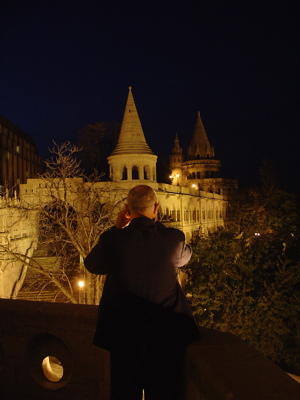
I asked several former colleagues to send impressions to Signalwriter. Here's the first, from Peter Thoma, Chairman of Erat, Thoma & Herzog of Rorschach, Switzerland. (Yes, that’s Peter from the back – a photo of him photographing Budapest at night.)

“New faces, new ideas, and so forth. The most interesting thing to me is the fact that – although we are all advertising people – the markets in the different countries are completely different.

“We in the old economy work in saturated markets with all the too-well-known side effects (too many suppliers and a very slow growth if any at all, too many hungry sharks for too less demand) whilst our colleagues in the new eastern markets are programmed for growth - dual digit rates!

“We in Switzerland, Germany, France, UK, Scandinavia struggle to get our share of invitations for pitches whilst our eastern friends must be careful not to participate in too many. The same with agency marketing. Said one eastern friend, ‘Marketing or advertising for our own agency? What for? Clients just stand in a long line and we try to satisfy them all.’

“One thing always touches me personally: The eastern countries and economies were nowhere 10 years ago and we considered them dying Communists. And today? They talk about branding, experience society, corporate design, and all that stuff we thought was our invention! And I can sit in a Budapest cafe, using my laptop and surfing the Internet via a provided hot spot - for free! Try doing that in a Zurich restaurant.

“On the other hand our new friends sometimes just want to invent Dialogue again. They want to make the same mistakes we have already done. They dream of a pan-European PR campaign for DI, or of a centralized office to pursue the chase of a network client, etc. We ‘gray panthers’ are in place to keep them on the right track.

“Our 2006 Creative Forum will take place in Malta, the 2006 spring Managers' Meeting in Gdansk (yes!), and the autumn meeting in Paris…”


Thanks, Peter, for this first report. And thank you all for keeping me in the loop. More reporting from other Dialoguers shortly.

Sunday, October 09, 2005

Nickel Change


“Josephine March” noted this today (www.belle-blog.blogspot.com). I couldn’t pass it up: How many public servants does it take to change a nickel?

A lot. The new Jefferson 1800 nickel, due to be released in the Year 6, involved a panel from the National Endowment of the Arts, the Commission for Fine Arts, the Citizens Coinage Advisory Committee, the esteemed Secretary of the Treasury, the Director of the US Mint, the entire Congress, and the President of the United States, who had to approve the whole new Westward Journey Nickel Series. You can read the Treasury’s press release
here.

The third President’s iconic 5¢ image has been changed. For the first time, Thomas Jefferson is facing outward.

Jefferson himself is such a flexible icon, equally useful for Democrats and Republicans (although the Democrats seem to “own” him); businesspeople and socialists, men and women, and people of every color. He and his family – right down to the present day – can be said to be the nation’s first Kennedys…perennially entertaining and controversial.

He’s so hard to pin down. He wrote so much (and written it all so well), virtually everything he said has been continually displayed, arranged, and re-arranged for one purpose or another, including marketing and advertising. Newspaper people hardly know what to do with him. On the one hand, he wrote, “I do not take a single newspaper, nor read one a month, and I feel myself infinitely the happier for it.” On the other, he said, “No government ought to be without censors & where the press is free, no one ever will.”

I can’t top Josephine March’s joke. I do offer an additional thought about our Third President’s legacy: One pundit fits all.

Saturday, October 08, 2005

Changing Rules

There’s a code phrase for creativity – it’s “thinking outside the box.” That’s what a client and I were talking about last week in terms of a new model for his business. I said he ought to consider changing the rules.

He asked for an example and fortunately I remembered an old joke. (Unfortunately, I can’t remember where I heard it – so if it’s copyrighted, please forgive.)

Stevie Wonder met Tiger Woods for the first time and mentioned that he also was a golfer. The blind musician explained, “When I tee off, I have one of my guys call to me from the green. My sharp sense of hearing helps me aim.”

Woods was pretty skeptical about this, so Wonder suggested that they play a round for $100,000. Tiger jumped on that bet, figuring it’s the easiest hundred thou he’d ever make. “So when do you want to play?”

Stevie shrugged. “Pick any night.”

Friday, October 07, 2005

Getting Bearish

The more you look, the more you learn. I raised the topic of Allstate’s brand image; there have been some comments. So I explored further. I didn’t have to Google very long before finding www.allstateinsurancesucks.com.

This site’s intention is to [1] Be a forum for victims of Allstate Insurance; [2] Put victims and professionals together; and [3] Try to change insurance regulations to better protect consumers. It doesn’t make good reading for brand fans – especially when you consider how fast Web sites, e-mailing, and blogging can get the word out these days.


Pam Lagano, principal of Florida-based Lagano & Associates, highlighted Allstate in an article she wrote for the Jacksonville Business Journal on 12 October, 2001. She wrote:

“The slogan ‘You're in good hands with Allstate,’ for example, provides a common theme for all of Allstate's advertising that establishes a contract – a promise the company holds out to its customers. Not only does the ‘good hands’ promise rally all the employees to a common purpose, it brands Allstate as a company whose employees have a mission.

“Driven by a common set of business objectives and business strategies, all of Allstate's advertising serves to further dimensionalize this promise, graphically and evocatively establishing the corporation itself as a meaningful brand.”

Well, that has been my thinking, as you can see from these posts. The challenge posed by Allstate’s (possibly poor or even unethical) interactions with its policy-holders is not, in the end, a matter of who’s right and who’s wrong.

A brand is a perception – invented by advertising agencies. But the brand values have to be maintained and supported by “right actions.” How is the Allstate Corporation of Northbrook, Illinois, doing brand-wise? According to Web sites and bloggers, not very well.

More Bears

Read the comment to my previous post from Farout Man, below. You’ll understand that there is a commitment attached to a brand like Allstate.
Farout Man refers to an article on the Houston Chronicle Web site – it’s titled “State takes aim at Allstate over Rita claims,” posted today at 1.40PM. (Plug the url into your browser to read it.) The Texas Attorney General has filed a restraining order against Allstate’s denial of claims by policyholders unable to return to their homes because of Hurricane Rita-related damage.


In the paper’s Business Section this morning, a preceding article on page D3 pointed out that Allstate was “not quick with a check.” In it, reporter Purva Patel gave a reasonably balanced view of the claims situation. (Patel also authored the online news item this afternoon.)

Farout Man says, “Allstate can fly as many banners in parking lots as they want, but if they choose not to back up their words with actions, it won't mean a thing.”

He’s right – “You’re in Good Hands” is one of the brand’s commitments. No matter how many posters, newspaper ads, or TV commercials Allstate deploys, the brand will suffer damage if the company doesn’t keep its promises. How much brand damage will Allstate suffer? How much will the Red Cross brand sustain because of another article in today’s paper about the organization’s apparent failure to help a small town?

I think Allstate, among others, is too busy to measure this. My suspicion is that the brand itself will not sustain damage; but like the economic saying goes, “Bad money drives out good.” I’ll watch the activity around this subject and see what happens. Many thanks to Farout Man for making the extra point.

Hunting Bear

Sometimes, you get that bear. In the corner of a Wal-Mart parking lot, about two miles away, Allstate has placed a mobile recovery unit to help their policy-holders expedite insurance claims from both Katrina and Rita.

In case you hadn’t noticed, those two hurricanes have been through this part of the country like a sloth of angry grizzlies.

There have been several articles in newspapers about this particular unit (e.g., Mark Passwaters’ article in The Memorial Sun). These columns have described Allstate’s National Catastrophe Team and the good work they have been doing.

What I noticed is the inadvertent, but superb, reinforcement of the Allstate brand. Not that Allstate needs brand support. It is one of the best recognized brands in the US. Yet it’s the very visible association of Allstate with “good works” that, like the efforts of the Red Cross, will keep the brand’s positive level extremely high. Allstate logo banners are all over the parking lot, visible from one of the most heavily traveled traffic arteries in West Houston.

Positive brand comprehension exists and is reinforced despite other news reports of difficulties with insurance claims throughout the Gulf Coast region.

The fact that the Allstate recovery unit is in a Wal-Mart parking lot contributes to Wal-Mart’s already massive brand awareness, too. Wal-Mart has also been a highly visible presence in recent relief efforts.

This is a positive case of trade dress in action – carrying brand identification through to every element of a company’s activities, from coffee mugs to truck signage. Contrast this with what happened on 24 March 1989. The tanker Exxon Valdez ran aground on Bligh Reef in the upper part of Alaska’s Prince William Sound. The tanker, according to NOAA, carried about 53 million gallons of crude oil. In just a few days, the wrecked tanker had spilled almost 11 million of those gallons into Prince William Sound. Every photograph of the grounded vessel clearly showed the brand owner: Exxon. Every human remotely familiar with the event always referred to the tanker as the Exxon Valdez. Bad, bad, very bad for Exxon.

Total brand identification brings both rewards and risks. Sometimes, these are not fully evaluated in creating and maintaining a brand. Sometimes, brands get extra blessings thanks to human resourcefulness and corporate responsiveness. Sometimes, events just come along and bite your brand in the ass. The bear gets you.

Bear this in mind, then: Plan ahead. Consider what might happen to affect your brand and your trade dress in the future.


Thursday, October 06, 2005

Recovery City

I returned to find that Houston is still in “recovery mode” in many ways – including marketing and marketing communications activities. Large-scale hotels that might be hosting regional tradeshows are being used as FEMA housing instead, so normal reservations have been cancelled and shows rescheduled.

A two-day conference, Direct Marketing Days, has been cancelled. It was due to start Wednesday and continue through today. The immediate reason given was a very low rate of registrations. The rock-bottom reason is that people who might normally have attended are busy catching up with their own overdue work. It’s too bad: the sponsor, the Houston Direct Marketing Association, put together an excellent agenda that was to have included presentations on direct marketing tools, strategies, and programs. The founder/CEO of Direct Marketing Network, Pam Lockard, was to have been one of the speakers.

On the good side, a Career Open House conducted by one of the major oilfield service companies took place here as scheduled 28 September and was very successful. I was privileged to help construct and write the pre-Open House communications program before I left on holiday.


We used a short-run but intense mix of media to generate attendance – and learned a few things to the bargain. Newspaper advertising generated 29% of the attendees. Radio commercials (including a flight during one of the Houston Texans football games) brought in 26%. Direct mail accounted for 20% of the job-seekers. And word-of-mouth, “told by a friend,” generated 24%. The last percentage point came from people who noticed the signs put up around the Open House site.

Radio showed its strength – during Hurricane Rita’s evacuation, a huge number of people were listening to their car radios. Mail delivery, on the other hand, was partially interrupted by hurricane preparations.

Hats off to the clients, who not only got the kind of results they were looking for but ensured that the effect of the various media was measured. It’s the kind of forethought that will make future programs easier to recommend and support.

Friday, September 30, 2005

Turning Blue

Here in Minnesota, there’s quite a bit of hilarity attached to watching Southerners catch their deaths from cold – even when the cold is only 45°F. Think about what you have heard of this part of the country from Garrison Keillor, the radio humorist, and you’ll quickly realize that there’s a certain rural toughness associated with the onset of winter.

Last evening, Barbara and I were invited to dinner by Pat and Steph Murphy (the bride’s father and mother – Steph is Barbara’s youngest sister). By the time the immense steaks were going onto the grill, the evening had turned chilly…for me. By dinner time, I had borrowed one [1] extra sweatshirt, one [1] winter jacket, and one [1] pair of woolen mittens – and was still turning blue.

The engaged couple and their friends, Pat, Steph, even Barbara were all solicitous in their sly way: wasn’t it a pity that my thin blood wasn’t thickening up fast enough to withstand the cold; while they sat around the front porch OUTSIDE in shirts and jeans.

Nevertheless, we had a classic Minnesota farm dinner, with enough food on the table to feed the Chinese 8th Route Army. The cool weather made everybody extra hungry.

By the time the groom and his friends left for late-evening tuxedo fittings, I had fueled myself to the point that I could string two sentences together without my teeth chattering. There’s something to what Keillor’s fake advertising for Powermilk Biscuits says: Eating up here gives men the strength to carry on through the winter. “Heavens, they’re tasty!”

Bless the power of advertising. Now I’m headed for the Chatterbox Café for another cup of coffee.

Thursday, September 29, 2005

Road Trip

Nothing like a 1200-mile drive to freshen up your advertising perspective. The best: Barbara could see a big, red balloon floating about a hundred feet in the air in the distance as we drove north on I-35, in northern Missouri.

As we got closer (and noticed an approaching exit ramp), we realized that the balloon was a giant, inflated apple, suspended over an apple orchard on the east side of the Interstate. It was elegant, simple. There’s no way you could miss the idea that apples were for sale at that location.

As we stopped in various towns for dinners or sleepovers, more ag-related commercials began to show up on TV, from Ardmore, OK, right on through to Lake City, MN. Dekalb, John Deere, Cenex – big names in the bread basket of the US whose advertisements just don’t show up on national TV, or on Houston-area channels.

Monday, we met people returning to the Houston area from as far north as Norman.

It was (virtually) winter when we arrived – high 40s, with the wind blowing hard from the North. Considering that the thermometer was hitting a hundred when we left Houston, our welcome to Minnesota has been chilly, weather-wise. But the family is beginning to assemble and the human welcome has been very warm indeed.

I've had the opportunity to visit with one on my clients, Automation Services, here in the state. This is a smaller automation integration company with excellent capabilities; the management team agreed that the company’s strength lay in service, so Paul Leigh and I shaped a new brand image for the firm to emphasize that strength. It has been important to confirm that the marketing materials (including
www.asi-e-com, the new Web site) I developed for this company have been working so well for the past six months – a first-hand client meeting being better than e-mail and telephone conversations in this case

More later from the Star of the North.

Sunday, September 25, 2005

Stormwatchers' Farewell

Maybe the Houston Chronicle experiment in citizens' journalism hasn't generated the same level of excitement as watching Colin Clive scream, "It's alive! It's alive!" in the original Frankenstein movie.

Nonetheless, it has been a pleasure to participate in the Stormwatchers blog for this past intense week. Thank you, Dwight Silverman, for the opportunity. The respondents who e-mailed us were supportive, concerned, even funny (except for the guy who didn't really, really like seeing the cookie recipes).

To the other Stormwatchers, what a great crew. Thanks to you as well. Now the sun is hot and bright, I've finished cleaning up the yard, and I hope we NEVER have the same kind of occasion to do this particular thing again. But weren't the results terrific?


This is Spring Branch, signing off from Stormwatchers - but not from blogging. You regulars know exactly where to find me.

Saturday, September 24, 2005

Passing Parade

Since our neighborhood emerged from Rita's clutches with no more than a few, paltry branches, it feels as though we've done our job. We survived. On the other hand, it's remarkable to note the hurricane's resemblance to a parade: loud music, colorful bands, lots of noise have all receded into the distance. The media's attention is on Beaumont and properly so...a community much more hurt than our part of Houston. There’s hardly any news about what remains of Rita, so fierce in confrontation, so tattered in leaving.

One of the two couples who evacuated our block arrived home from San Antonio around noon. Barbara and I found them raking up the branches and leaves in their front yard. Their trip to San Antonio took about five hours, through the clever use of back roads; the return no more than two-and-a-half. Bruce was planning to retire to his easy chair and watch the Notre Dame game on TV. Otherwise, all is serene. Our sympathy to other parts of the Houston area.

As an extra treat, my regular watcher in the East, Susan, sent the following in re Sarah Bernhardts:

"The Catholic school version is chocolate, in case you would like to expand your repertoire.

“3 squares unsweetened chocolate (melted in microwave) added to 1 can sweetened, condensed milk. Add and mix well:
1 cup old fashioned oats
1 cup coconut
1 cup broken walnuts or pecans.

“Use an ice cream scoop, drop on parchment paper and bake for 15 minutes at 350 degrees F. You can put the cookies close on the sheet as they do not spread much. TIP: if you melt your chocolate in a big enough bowl, it's a one bowl recipe.

“Glad to see Houston made it through the storm. Have another cookie."

Sweet.

Sarah Bernhardts

Just in the last two hours, the winds have moderated. Meanwhile, Barbara woke up; when I bragged that I'd told everyone about her Mary Jane cookies, she started laughing: the cookies are named after Sarah Bernhardt.

In the interest of accurate reporting, then, let me correct the record. I breakfasted on fresh coffee and Sarah Bernhardt’s cookies. Hard to believe her name’s not as familiar as it once was, but the famous French actress did die in 1923. “The Divine Sarah” must have whipped up these cookies between performances. The recipe:

4 cups old-fashioned oatmeal
2 cups brown sugar
1/4-pound butter or margarine, melted
2 tablespoons vanilla

Mix all ingredients together and fill muffin tins half-full. Bake at 350 degrees F for about 15 minutes. Cool for an additional 15 minutes and remove the cookies from the tins. (Note: this makes them much easier to eat). “Makes 2 dozen dangerous cookies,” according to one of Barbara's 1960s' era cookbooks, Saucepans and the Single Girl.

There. The record is corrected - and it’s not buried on a back page, either.

Windy City

Good morning from Spring Branch, Texas. Unlike other "Stormwatchers" bloggers, I'm behind-hand, since the Time-Warner cable access was out for several hours. I have been consoling myself with fresh coffee and the Mary Janes that Barbara baked last night - she was inspired by all the cookie-making going on yesterday, as reported by the other bloggers.

The winds are blowing here in the west - just as they are all over the city. But it appears from my windows as though damage has been confined to the smaller variety of branches, leaves, etc. "Hurricane Chimes" never stirred. Varying amounts of damage have been reported throughout East Texas, from Beaumont and Galveston up through Livingston. Houston has emerged relatively unscathed.

Seeing other bloggers' photos is a hoot...I am not so equipped electronically. I feel like the Houston Chronicle comic strip character Crankshaft: looking for a shutter camera when the rest of humanity has gone digital.

To all of you who have e-mailed - from the UK to Italy, Canada to Brazil, even as far away as Kansas City and Minneapolis, thanks for the notes of encouragement and prayers.

Wait! What's that? I hear the Mary Janes calling out to me. Well, since I won't be going out quite yet, I suppose I can squeeze in one more. Kudos to our City and County teams for the superb work. And for those of you who evacuated the area, I'll say what some of the politicians have gingerly avoided: do NOT try to come back to Houston or Friendswood or any other place in the Houston DMA. The winds still blow. The rains still fall. Leave the roads clear for emergency vehicles. All the best 'til later.

Friday, September 23, 2005

Hurricane Chimes

It's about quarter to 3PM here in the west, and moderation has set in. As of now, only two families evacuated. The rest of us have policed the street to a fare-the-well, made a walk-down at 2PM, and plan for another at 5. Everyone's worries focus on tropical storm-like rain and wind, since Rita's track has moved a bit east. However, everyone also knows that Rita is changeable.

We'll be able to tell because of our “Hurricane Chimes.” Just a couple of years after Barbara and I moved to Houston, we met a young metal artist with some interesting ideas. We bought several of his pieces, including a giant yard sculpture he named “Hurricane Chimes.” It has a series of five immense steel pipes, graduated in size, each one welded to swing freely, back and forth. He joked with us that if the pendulums ever swung horizontal, we'd be in the middle of a hurricane.

“Hurricane Chimes” is almost 20 years old. Mark Bradford is older, too - but one of the better-known metal sculptors in southeast Texas...a regular participant in Houston’s famous Art Car Parade. We'll be able to tell him if his indicators work. And boy, we’re hoping that we don’t hear those chimes ringing.

Thanks again for the responses. Talk to you again soon.

Be Prepared

"It's the Boy Scouts' marching song," for those of you who remember Tom Lehrer. Sorry to be late getting to the computer, but there are still things to put away and gotten under cover.

Thanks to Stormwatchers and this blog, there has be a tidal wave of feedback and inquiries (pun intended). Again, many thanks for the best wishes and the advices. As you can see by the highway cameras at http://traffic.houstontranstar.org, the traffic has diminished. An old friend in Fayette County e-mailed me earlier this AM about the "hundreds of stalled cars" out to the West.

Particular thanks to our European friends, who watch the news just as much as we do, and have sent their regards and wishes for our safety.

It's very quiet in the neighborhood. Barbara gestured me out onto the patio after dinner and said, "Listen." I smiled - no traffic noises anywhere.

For those who are inclined to rail against "the government," especially about the failure to provide gasoline for the long lines of evacuees on the highways yesterday, I offer a counterpoint: Houston and Harris County have done as excellent a job as they can. No plan survives contact with the enemy, sayeth the old military epigram. In this case, the "enemy" is a major threat to the fourth largest city in America...Rita. We learned from Katrina - and now we have more lessons to absorb.

Now that I have blogged, it's time to go take care of the large pile of heavy pine tree trimmings which "magically" appeared in a neighbor's front lawn between our shutting down last evening and my waking up this AM. Don't know where they came from, but we have to get them under some sort of cover. More later.

Thursday, September 22, 2005

Catching Up

While the day heats up, Barbara and I are taking a break from packing the garage. Thanks to everyone who has sent notes. I'll try to answer them.

Maureen asked why we decided to stay here in Houston. There are several reasons. First, the evacuation routes started clogging up very quickly - as early as yesterday (Wednesday) mid-day. The routes are even more congested now. Click www.houstontranstar.org/ - it's our metropolitan traffic control center. Once you find it, you can access the various traffic cameras. Look for the views on I-10 West, I-45 North, and Highway 290...nobody is going anywhere very fast. Second, we discussed evacuation and could not help feeling that there was greater security in the known than the unknown: home versus being on the road, etc. These reasons may not satisfy readers outside the area but they work for us.

Susan in North Carolina wrote that another, mutual friend of ours here in Houston calls it simply "kite weather."

Charles in Toronto made an outstanding point about the extraordinary air pressure being exhibited by Hurricane Rita. "It will be a monster," he says. Unless the City of Houston issues a "Mandatory" evacuation for the entire urban area, though, we'll stay in town. We're grateful for your wishes and prayers, Charles.

Lynn and Greg in Minnesota suggested we leave early for the forthcoming wedding in Lake City - like RIGHT THIS MINUTE. Perhaps they have been talking with Charles.

Donna sent a large number of incredibly valuable tips - many, many thanks for these. And finally, Jean, another Canadian, suggested an addition to the MOOJITA Scale: M6 Tornado - Ground Beef!

Thank you all for your continuing messages. Barbara and I are going to extend our break by watching a video...I think she picked "Twister."

Our Block

While Barbara finishes up a "final" shopping list, I have canvassed the neighbors on our block. Some are leaving, or have left already. Half us of - six or seven families - are staying, and will watch the neighborhood carefully. Our biggest challenge is policing the area for UFO materials. Some evacuees haven’t been as careful as others. We have a very stable neighborhood, and most of us know one another. Cellular service, or the lack of it, is the most-remarked failure so far.

This afternoon, after putting our own planters, water bottles, and deck chairs away, I’ll round up a couple of guys and try to stuff trash cans, etc., in safer places. Across Kempwood, there’s a yet-undeveloped pasture whose owner keeps longhorn cattle. So finding the information below, on
www.juliantrubin.com, is appropriate for this entry. Simply replace the word “tornado” with the word “hurricane.”

Everybody knows about the
Fujita Scale which measures the power of tornadoes. But nobody really knows what all those types of twisters do to COWS. So here is the MOOJITA Scale...
M0 Tornado - Cows in an open field are spun around parallel to the wind flow and become mildly annoyed.
M1 Tornado - Cows are tipped over and can't get up.
M2 Tornado - Cows begin rolling with the wind.
M3 Tornado - Cows tumble and bounce.
M4 Tornado - Cows are airborne.
M5 Tornado – STEAK!

Saturday evening may be Steak Night in Spring Branch. Good luck to those driving out. Good luck to those staying behind.

We're Staying

Good morning. We're staying, and will continue our preparations for the coming storm. This will include pickup and storage for everything in the front and back yards – no UFOs. Then I'll visit the neighbors - see who's staying and who's not. While electricity and cellular services continue, I'll keep posting. Thank you for your e-notes of caution and care.

I am also participating in an experiment by the Houston Chronicle in "citizen journalism." Go to http://blogs.chron.com/stormwatchers/, the newspaper's blog site, to follow what's happening. More anon.

Wednesday, September 21, 2005

Rita's Coming

…And she’s got a 165-mph chip on her shoulder. Some of my out-of-town readers don’t actually realize what’s in store for us down here, even in the aftermath of Hurricane Katrina and its considerable news coverage. Evacuees are not taking any chances...they are getting away before this turns ugly.

I was at the HEB supermarket on the corner of Gessner and Kempwood early this morning, about 8AM. It was already crowded, but everyone was polite and patient. HEB has a distribution center about a mile north, on Clay Road. So stockers were refilling the shelves as quickly as possible. Bottled water, tuna, and diapers were top o' the pops this AM.


Now that the storm has been upclassed to 5, more and more people will leave the area. The Interstate highways to the west and north are bumper-to-bumper, and the Sam Houston Tollway (a portion of which I can see out my back window) is abnormally congested.

Barbara and I will discuss Rita’s impending arrival this evening, and plan from there. My normally reliable cell phone is hobbled by Cingular's circuits being busy right now. It's a bit of a mess - but it's an early mess.

More on this later – I’ll try to keep you up to date on our whereabouts…we may decide to depart early for Minnesota. Be safe: Rita doesn’t look like she’s worth the wait.

Tuesday, September 20, 2005

Type Brands

Next to my computer sits a bottle of champagne. The real stuff: Champagne S. Coquillette à Chouilly, from grower Stephane Coquillette in the Marne. It’s not a brand you’ll find stateside. It came as a house gift from Philippe and Christiane Holtzweiler of Freiburg, Germany, when Philippe visited us this past spring.

This is different way to look at brand types – as opposed, say, to manufacturer brands and own-label brands. Think of a type brand as a product descriptor that has become so familiar that it lives and breathes on its own. The European Union strongly believes “Champagne” is a geographic indicator that should be used only for wines made in the region of that name. The same is true of names like “Sherry” and “Port.” (“Escalator” is the reverse – an actual brand name that became a generic term. “Band-Aid” narrowly escaped this fate.)

The US believes champagne, sherry, and port are “semi-generics.” It’s important to the concept of type brand, because it’s taken the EU and the US more than 20 years to approve a wine-trade agreement. (This is reported in last Thursday’s Wall Street Journal, page A18, reported by Sarah Nassauer.)

Technical details aside, some European winemakers accuse various US sparkling-wine makers of purposely misleading consumers. That is, American wineries put “Champagne” on their labels when the wines are actually made in California or Texas or Washington State. Real champagne should come from…Champagne.

It’s pretty serious stuff. According to Ms. Nassauer, 43% of Europe’s wine exports came to the US last year. That’s a lot of money. Think about it another way. Would the Disney Company willing have used DisneyTerre instead of “Disneyland Paris?”

Most US brand names and descriptors never leave the country. The American consumer and industrial markets are so hugeous, there’s often no need to consider the impact and meaning of terms in other parts of the world. But what happens when type brands are involved? Doesn’t the term “Washington State Apples” have a brand value when the fruit is exported to Japan? What happens when Japanese apple-growers (orchardists?) use such a term to describe their apples, in order to capture that indication-of-origin caché? Would you buy “Swiss-like Chocolate?” How much “Italian sausage” do you buy that’s actually made in Italy? When you purchase “Virginia ham,” is it really from Virginia? How about “Canadian bacon?”

Many of these terms entered American usage years, even centuries ago. My Oxford English Dictionary credits Champagne as “the name of a province in Eastern France” and notes its first use with a capital “C” in 1664. Encarta notes that the “process of making sparkling wine has been copied by wine-makers in many other parts of the world. These producers may put the words méthode traditionnelle on bottles to indicate that the champagne method has been used, but they may not use the words champagne or méthode champenoise.” (I’m using Champagne as an example – not a political exercise.)

When you go to the liquor store to pick up a little something for your anniversary, do you ask for “sparkling wine” or “champagne?” I thought so.

Producers and manufacturers have a right to protect their brands and descriptors, especially when such descriptors gain wide acceptance. Overcoming consumer habit, on the other hand, may make a brand program much more expensive and time-consuming. Ask Coca-Cola.

This seemingly obscure US-EU settlement has some impact on the branding work I do. I’ll consider it further as Barbara and I are drinking the 1998 Champagne S. Coquillette à Chouilly. Cheers!

Monday, September 19, 2005

Pirate Talk

Avast, ye swabs! What do the following three jokes sent in by Rachel Baron have in common?

1. What is a pirate’s favorite cheese? [A: Jarlsburg].
2. Which is a pirate’s favorite body of water? [A: The Arctic Ocean].

3. Where do pirates travel in the States? [A: They just love ole Arkansas].

Now, say the answers again – out loud – keeping in mind that today is National Talk Like a Pirate Day! Arrrh! Yer right, mateys, it’s talk like a pirate or walk the plank.

Whether or not you’re a fan of Treasure Island (and my all-time favorite plot device, the Black Spot), go to
www.talklikeapirateday.com. Don’t ‘ee dare stop to pick up that buried treasure.

You’ll find the whole story there. But the plain fact is that National Talk Like a Pirate Day was invented by John Baur and Mark Summers just over 10 years ago: “…And that really should be all you need to know about the origins of Talk Like a Pirate Day. We're guys. Not men, with responsibility and suits and power ties. We're guys, with all that that implies.”

Robert Louis Stevenson enthusiasts know this. Members of The Gun Room, the Aubrey-Maturin über-group site, know this. Even fans of “Pirates of the Caribbean” know this. Just with the basics (I’ve pirated these from their web site), like:


Ahoy! - "Hello!"
Avast! - Stop and give attention. It can be used in a sense of surprise, "Whoa! Get a load of that!" which today makes it more of a "Check it out" or "No way!" or "Get off!"
Aye! - "Why yes, I agree most heartily with everything you just said or did."
Aye aye! - "I'll get right on that, sir, as soon as my break is over."
Arrr! - This one is often confused with arrrgh, which is of course the sound you make when you sit on a belaying pin. "Arrr!" can mean, variously, "yes," "I agree," "I'm happy," "I'm enjoying this beer," "My team is going to win it all," "I saw that television show, it sucked!" and "That was a clever remark you or I just made." And those are just a few of the myriad possibilities of Arrr!


Now ye know it too. Start early – talk like a pirate, ye lubbers, else it’s the Black Spot fer ye. Or a one-way trip to the Arrrtic.

Saturday, September 17, 2005

Yellow Journalism

Attention, media friends: Now that Viet Hoang is publishing Yellow magazine, an old term takes on a whole new meaning.

At the end of the 19th Century, Americans got their news from newspapers – they were pretty much the only news sources. Major newspapers like Joseph Pulitzer’s New York World and William Randolph Hearst’s San Francisco Examiner and later the New York Morning Journal changed their newspapers to attract more readers (the “circulation wars”). Sensational stories and scandalous news coverage were ordered up; garish drawings and comic strips were added. Editors actively demanded and printed irresponsible and flamboyant news reporting. After Pulitzer began publishing color comic sections that included a strip entitled "The Yellow Kid" in early 1896, this type of paper was labeled yellow journalism.

A funny thing happened on the way to the 21st Century: the complexion of America changed.

Today (by 2004 figures,
www.infoplease.com), Asians and Asian-Americans make up 4.2% of our population, more than 12 million of us. Additional studies show that this part of our population is one of the best educated and the most affluent in our history.

Yellow, which Hoang began publishing last spring, appeals to this part of Houston’s kaleidoscopic population. It’s up-to-the-moment, vivid, and beautifully produced. These days, it’s referred to as a niche publication, and it’s one of the best designed new magazines in the Houston area.

It focuses on fashion, lifestyle, art, and entertainment, and the Asian-American people who are involved in these areas. The only “yellow kids” that appear in its pages are artists, fashion models, doctors, politicians, and restaurateurs – talented, young, and trendy.

It’s already attracting major advertisers, who recognize the significant buying power that Asian-Americans represent. The September number is available now, and if you haven’t seen it, you should pick up a copy or go to
www.yellowmags.com. It’ll change the way you think about population segments and give you a creative media opportunity to take to your retail and commercial clients.

Do it today. There’s no better sound that that of a stereotype being smashed.

Friday, September 16, 2005

Disaster Reporting

Thanks to Rob Schoenbeck of The Cartel in San Antonio for sending this article. It fits with other posts about communicating in a disaster. Reportage is communication, for sure.

It’s a long piece (yes, you have to read to the end) from today’s London Times, bylined by Gerard Baker. All copyrights apply.

Space, food, medicine, protection:
it's better here in Barbara's hall of plenty

BARBARA BUSH. Don’t you just love her? Last week she put her elegant heel right into what her husband used to call deep doo-doo when she told a television interviewer that evacuees from Hurricane Katrina who had been housed in the Houston Astrodome were really very happy with their lot.

“What I’m hearing is that many of them want to stay in Texas,” the former First Lady said. “The hospitality has been so overwhelming. And so many of the people in the arena here, you know, were underprivileged anyway, so this is working very well for them.”

Not since Louis XVI’s missus puzzled about the dietary choices of indigent Parisians has there been such an appalling display of aristocratic ignorance. How dare she? How could she? Even the White House winced.

But in the disgust that greeted her remarks in Highgate and the Upper West Side no one stopped to consider the possibility that Mrs Bush was, in fact, dead right.

Anyone who has visited the most deprived parts of America’s cities, rather than merely empathised with them from afar, would have no difficulty whatsoever with the proposition that the inhabitants would prefer an air-conditioned sports stadium with all the food they can eat, the country’s best medical attention and the benign security of National Guard protection to the hunger, sickness and lawlessness in which many of them live.

Large parts of Detroit, Philadelphia, Chicago or Los Angeles already look, on their best days, as though they have been hit by natural disasters. I’m not at all surprised to hear that the fortunate who made it to Houston are eager to start new lives there, rather than return to the crime-infested housing projects of New Orleans.

But Mrs Bush touched on a larger truth, almost wholly obscured in the rush to judgment. Most of the attention has focused on how the Government failed in responding to the disaster. I have done it myself. Grand conclusions have been drawn about the (flawed) nature of American society. I’ve done a bit of that too. But little has been said about what the response of ordinary Americans — not mayors or governors or presidents — tells us about the strengths of that same American society.

Another lucky group of New Orleans evacuees has been housed not far from where I live in Washington at the DC Armoury, the local headquarters of the National Guard. This week, along with the truckloads of food, water and clothes, came something that will, in the longer term, be of even greater assistance, a group of eager employers looking for workers.

Forty-two local businesses participated in a job fair for the new homeless at the Armoury on Tuesday; more wanted to take part but couldn’t because there was limited space. Twenty of the 150 or so evacuees were hired on the spot. An official at the District of Columbia government involved in organising the event said that more were expected to be offered jobs in the next few days. The exercise was such a success that employers are demanding another one. If there’s anyone left still to hire it will take place in the next couple of weeks.

The story is being replicated across the country. The victims of Katrina are getting new opportunities. Some of it comes from an immense outpouring of compassion by Americans in the form of hundreds of millions of dollars in charitable contributions and unquantifiable help in housing families and schooling children. Some of it comes from the unsentimental compassion of the free market: the unerring capacity of the capitalist system to match those who have something with those who need it, whether it be labour, capital, goods or services.

Both tell us far more about the way this country works, the strengths of its values and people, than the bureaucratic bungling in Baton Rouge and Washington.

Of course you will almost certainly not have read or seen much about this, especially outside the US. The world has indicted America once again on charges of ineptitude and racism and has moved on to more important matters such as Britney Spears’s baby. For a variety of reasons this good news about the response of ordinary Americans is of little interest to the media. First, no self-respecting reporter wants to waste his time with insights into the better angels of human nature. No one ever won a Pulitzer or a Bafta recounting banal tales of man’s humanity to man.

Secondly, it really doesn’t fit too well into the stereotype that entrances most of the world these days. Anything that doesn’t show Americans as stupid, selfish, warmongering, religious bigots, half of them living in pampered luxury in garish purpose-built Italianate mansions, the other half downtrodden in the ghetto by Halliburton stock-owning fat-cats, isn’t going to make it to the front pages or the Ten O’Clock News.

But the main reason I think these recovery efforts by millions of people attract insufficient attention is that most people have become conditioned to thinking solely in terms of government’s responsibility. Of course, the bulk of the recovery effort must be paid from public funds as President Bush announced yesterday but most Europeans and — despite decades of a so-called conservative revolution — a large number of Americans, can’t think beyond the government.

Something bad happens: it’s government’s fault for not preventing it. It’s government’s responsibility for cleaning up the mess. And if the mess gets bigger, that’s government’s fault too.

The irony is that New Orleans is one of those cities where government-dependency had reached such levels that a kind of economic and social anomie had set in. For many of its victims the escape depicted by Barbara Bush is just what they needed.

In response to the huge flood that drowned the Gulf Coast in 1927, President Calvin Coolidge sent his secretary of Commerce, Herbert Hoover, to head the mainly private-sector reconstruction effort. As quoted in yesterday's Wall Street Journal, Hoover said, "I suppose I could have called in the whole of the Army. But what was the use? All I had to do was call in Main Street itself."

Thanks, Mr. Baker, for writing about what Main Street really means to America. Thanks, Rob, for passing it along.

Wednesday, September 14, 2005

Ware Marriage

Not a warning...a celebration! I hadn’t gotten recent news from Robert Ware, former principal of Ware Anthony Rust (WAR), the fine British ad agency and Dialogue International’s UK member.

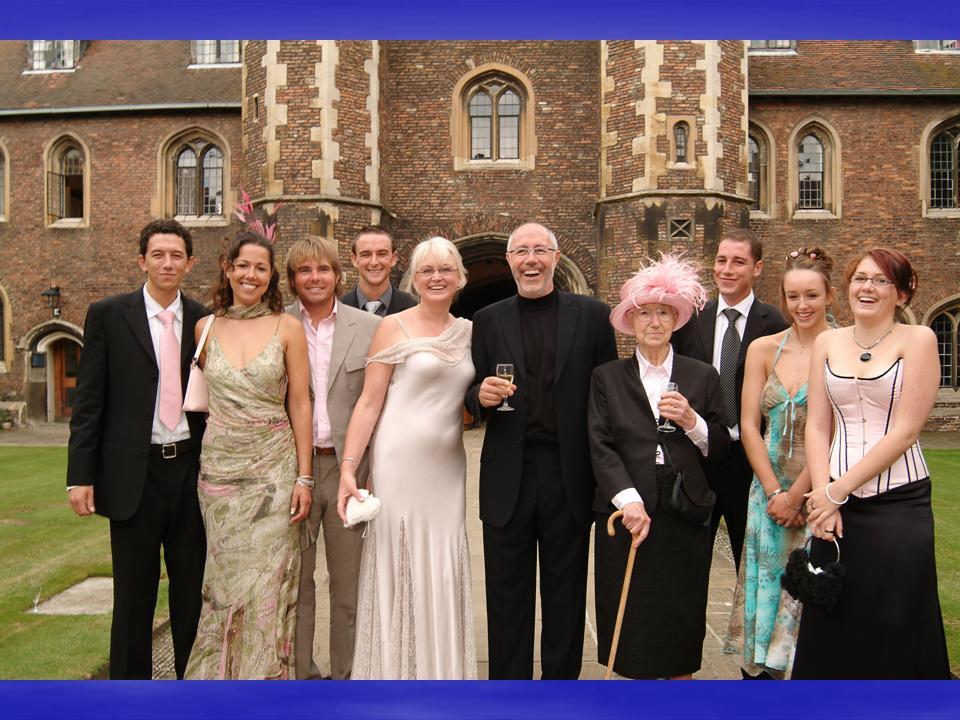
I wrote him yesterday and he answered with a surprise: “Di and I have got married after 18 years together – a wonderful occasion at the Old Hall at Queens’ College in Cambridge.”

I’d better give you his picture’s caption before this post gets too lengthy.

PHOTO: The Ware family is a truly modern unit as it comes in the shape of a 'blended/extended' group. The picture, L2R shows Barney Ware, Kirsty Ware, Damian Drury (KW's partner), Tim Hall (son of my first wife with second husband, stepbrother of B, K &T, and brother of Emily), Diane Ware, Robert Ware, Winifred Ware (mother of RW and going strong at 94!), Toby Ware, Emily Hall (see Tim Hall), Hannah Ware (daughter of R&D).

Whew! I’m crazy fond of Winifred’s hat. That’s Old Hall in back, I guess…looks old. Diane (née Spencer) looks phenomenal.

There are many more photos, which I’ll summarize this way. Some 80 guests attended, including Graham and Jo Rust from Prague. Graham is Robert’s former partner who left WAR years ago to start an ad agency in The Czech Republic – another staunch Dialogue member to this day.

The wedding site, as mentioned above, was Queens’ Old Hall, very recently refurbished so that, according to Robert, the colors looked as new (so that's only about 500 years ago). “Quite staggering,” says the groom, “and a tremendous privilege to be able to party in such a majestic hall.”

His final quote: “And the only pagan thing about the occasion was the amount of 'liquid refreshment’ that was cheerfully consumed. This probably fuelled some of the interesting and irreverent comments to be found in the 'Wedding Book’ – a beautifully made Florentine leather-bound volume – that everyone was asked to add their bon mot within. Great fun was had by all.”

Robert has, over the years, been a terrific colleague as well as a long-distance friend. I have enjoyed Robert’s great spirits (and Diane’s and Hanna’s) on more than one occasion, not only at Dialogue Managers’ Meetings but at the Wares’ home. (We’ll leave that part of the story gracefully cloaked.) The company and the hospitality have always been heart-warming.

In addition to raising up a very excellent marcom agency just across the Cam and the Water Meadow from Cambridge’s great colleges, then leaving WAR to be carried on in the hands of an superb crew, he’s got himself officially hitched up. I’m sure that, at the very instant of matrimony, Robert said to his new bride, “Now, Diane Spencer, be Ware!”

Robert and Di, congratulations from the Republican part of Texas. I’m uncertain if the realm of British advertising will survive while you improve your golf handicap, but I wish both of you the very, very best of life.

Tuesday, September 13, 2005

Advertising Sweat

When cellular circuits are busy and the people you have to reach can’t reach a computer, voice and Internet vectors may not be enough – just what’s happened in the wake of Hurricane Katrina.

Despite the stories you hear about the impending demise of print and other older media forms, there are times when you have to use every weapon in the inventory. When getting the word out is critical, companies turn to…advertising.

There are several kinds of communications. First, recent appearances of ads and broadcast announcements drive home the point that corporations are doing everything in their power to get information in front of their employees and employee families. In the Houston Chronicle alone, there has been a stream large-space advertising from a host of companies – Northrop Grumman and BP, to name just two – offering every kind of assistance: benefits information, housing options, contact phone numbers, paycheck pickup locations.

The advertising is supplemented by highly visible corporate home-page links to relief and assistance pages for employees and families.

Second, companies like Visa and Pfizer have been messaging in ethical ways about disaster-related topics: information about credit card fraud monitoring or emergency supplies of medicines. (See last Sunday’s post about “Disaster Marketing.”) There are more of these ads, more from these companies, at a time when information can make a major difference in how people get through this trauma.

I know some of the corporate communications professionals who have working hard, long hours to get these messages in place and in front of their people. You might say they’re just doing their jobs…but isn’t this exactly the time when you want them to do those jobs with care, passion, and a lot of sweat?

I do.

Monday, September 12, 2005

The TEN

When I mentioned the Ten Commandments briefly in yesterday’s post, I got a darn good offer from Susan Kirkland. She wrote, “I just happen to have the TEN (on stone, no less) in PDF format if you’d like to post the download to your site.”

Some of you have now realized that I haven’t completely figured out how to do some of this photo-posting, so I make you an offer in return (and presume that Susan won’t mind). Drop me a note – not anonymous, please, I’ll need an address. I’ll send you the PDF she sent to me. You’ll like it.

Answering the next question, though, may be tougher. Which TEN will you be getting? Although I’ve been in and out of the Pentateuch for years – and there’s a giveaway – the fact is there are somewhat different versions for Protestantism, Catholicism, and Judaism. To help you with the answer, compare Susan’s PDF with www.positiveatheism.org/crt/whichcom.pdf. Think of it as an exercise in proofreading.

Sunday, September 11, 2005

Disaster Marketing, Hurricane Katrina and Mount Vesuvius.

This is about the ethics of marketing and selling after a disaster. It’s a bit of a ramble, I’m afraid…starting as it does in AD 79.

Until Vesuvius blew its top on 24 August, 79, citizens and vacationers in Pompeii didn’t know that mountain four miles away was a volcano. It had been inactive for, say, 1,500 years. Romans had built themselves quite a resort city along the Bay of Naples. Most people didn’t evacuate – they stayed in their homes, temples, and baths thinking that the buildings would protect them. Almost all of them were trapped and died from fire, asphyxiation, or outright burial under yards (not inches) of ash and pumice.

The Roman Empire never rebuilt Pompeii and the other cities that were destroyed by volcanic eruption.

There’s one surviving account by Pliny the Younger. His uncle, Pliny the Elder, was a Roman official in command of the fleet at Misenum, at the top of the Bay of Naples. The elder Roman took his vessels toward Pompeii, attempting to rescue the citizens; he died on the beach. The younger Pliny wrote, “You could hear the shrieks of women, the wailing of infants, and the shouting of men; some were calling their parents, others their children or their wives, trying to recognize them by their voices.” (Read his letters at
www.eyewitnesstohistory.com).

People acted like people – mostly good, some bad, and some who saw a chance to take advantage of the survivors and people in the surrounding areas. Novels and movies have the occasional scene of ship owners overcharging desperate evacuees. Read history, and you’ll see this bad behavior repeated after just about every natural and man-made disaster in the record book. Gen-u-wine souvenirs from the recent battlefield at Gettysburg? The ‘I Survived Andrew’ tee-shirts, coffee mugs, pillows? The guy who tells you your roof is totaled, takes your money to repair it, and is never seen again?

After Hurricane Katrina, I see all the good again: the real outpouring of supplies and funding from all over the world, selfless volunteers, businesses who genuinely put themselves and their employees at the service of consumers and businesspeople who have to continue their lives, who need to keep their businesses going. Company after company has been searching out employees and their families who have been devastated by the hurricane, offering relief in massive, well-managed doses.

I’m also seeing the Web sites set up to illegitimately capture credit card numbers from potential charitable donors. A very few businesses are soliciting work from companies under the guise of ‘helping.’

There’s likely a set of ethical guidelines for businesses in these situations. Maybe a blog reader will send it along for posting. (I’d personally start with the Ten Commandments.)

For charitable giving, you can’t do better than checking with the Better Business Bureau (
www.bbbhou.org)

Meantime, I think you ought to ask yourself (as a businessperson in this situation), “Am I doing other people, other businesses, real good here? Or am I taking advantage?” You have to answer these questions for yourself, or consult with someone in the clergy. Ethics are not situational – they’re full-time.

At a minimum, I suggest the Golden Rule – and I hope I can always practice what I preach. The next volcano could go off right underneath West Houston.

Saturday, September 10, 2005

Saturday Joke

Went a-Googling for a joke, and found this at www.grouchyoldcripple.com, who posted it some time back from Ralph Gizzip (and which naturally I have changed for the worse).

An American tourist in London decides to skip his tour group and explore the city on his own. He wanders about, seeing the sights and occasionally stopping at a ‘quaint pub’ to soak up the local culture, chat up the lads, and have a pint or three.

After a bit, he finds himself in a very upmarket neighborhood...big, stately residences. No pubs, no shops, no restaurants, and worst of all...NO PUBLIC TOILETS.

He really, really has to go, what with the lagers and the bitters. He finds a narrow side street, with high walls surrounding the adjacent buildings, and decides to use the wall to solve his problem. As he is unzipping, he is tapped on the shoulder by a London Bobby, who says, "Beg pardon, sir, you simply cannot do that here, you know."

"I'm very sorry, officer," replies the American, "but I really, really HAVE TO GO, and I just can't find a public restroom."

"Ah, yes," said the Bobby. "Just follow me.” He leads the American to an alley, past some dustbins, then along a wall to a gate, which he opens. "In there," points the Bobby. "Whizz away, anywhere you choose."

The American enters and finds himself in the most beautiful garden he has ever seen. Manicured lawns, statuary, fountains, sculptured hedges, and huge beds of gorgeous flowers, all in perfect bloom.

Since he has the Bobby's blessing, he unzips his trousers, unburdens himself – and is vastly relieved. As he comes back through the gate, he says to the policeman, "That was really decent of you...is that 'British Hospitality?'"

"No, sir," replies the Bobby, with a satisfied smile on his face. “That is the French Embassy."

Friday, September 09, 2005

Search Rewarded

You won’t get a more rewarding story today than this e-mail from Zephyr Salvo Studios' Brian Bearden (www.zsalvo.com).

I thought I would share this miracle that happened when I was volunteering at Reliant Hall on Thursday.

I volunteered on Thursday to help the victims of Hurricane Katrina. I went down there thinking that I was going to help write resumes for people searching for jobs. Instead, I ended up running the communication center for people searching for missing relatives. I spent the day helping people search national databases for their lost relatives and making sure they were listed as survivors.

A women named Sharon Webb sat down and had me search for her 13-year old son, Trayshawn. We had no luck, so I entered her name and her son's name in the national databases. This women's story stayed with me. She had been looking for her son since they were separated at the New Orleans Convention Center. The story she told was unbelievable.

In the early afternoon, I flagged down a CNN crew and told them Sharon's story. I used the PA system in Reliant Hall to call Sharon. Sharon came and gave her story to CNN. Since there was a chance that her story would go nationwide, I gave my personal cell phone number as her contact.

CNN did run her story. I had no idea the number of calls I would receive or what kind of calls, so I put all of my cell calls to voicemail.

At 3.30PM, I received a voice mail. The voicemail was from a women in Arkansas. I called the number back and it was Sharon's sister-in-law. She was at a FEMA-sponsored hotel and had seen the CNN broadcast. She knew where Sharon's son was and the story does not end...The sister-in-law was missing her two children. After paging Sharon for the second time, I used my phone to put them together. Sharon had her sister-in-law's two children with her in Reliant Hall.

Miracles do happen. Do your part to help the people affected by Hurricane Katrina.

P. S. If you know of someone who is missing and would like to use the national databases to find them, visit
http://news.yahoo.com/katrinahelp. It lists most of the resources that are available.

Thursday, September 08, 2005

Synagogic Champ

September 15th is the beginning of Rosh Hashanah, the first of the Jewish High Holidays. Leigh Lerner, the Rabbi who will be officiating at his own synagogue in Montreal, Canada, sent me a newspaper clipping: the announcement of another synagogue’s High Holiday Services for the upcoming new Jewish year, 5766. He is comparing the name of this shul to “that lake” in Massachusetts, the one with 49 characters in the name – see www.websterlakeassociation.com.

The synagogue is Congregation Chevra Shaas Adath Jeshurim Hadrath Kodesh Shevet Achim Chaverim Kol Yisrael d’Beth Abraham. It’s 79 characters long – eat your heart out, Lake Webster.

Rabbi Lerner’s translation: “Congregation Talmud Study Group Congregation of Jeshurun Beauty of Holiness Dwelling Together All Israel Are Friends of the House of Abraham.” Very nice. (Alternatives welcome.)

The synagogue is at 5855 Lavoie Avenue in Montreal. If you’re going to be in the city and want to celebrate the Holy Days here, call (514) 739-2448. When you leave the synagogue, you should greet your fellow worshippers, “May you be inscribed in the Book of Life.”

Wednesday, September 07, 2005

Blog Misdirection?

Quite a bit of buzzing about blog marketing these days, including some comments from Greg Jarboe, president and cofounder of SEO-PR in an AMA e-zine article. He says marketers should become the authoritative voice on a subject and speak to blog readers, who are not ‘the average person.’

According to Jarboe, 57% of blog readers are men, and most are under age 30, higher-income and well-educated. As broadband users and Internet veterans, blog readers are sophisticated consumers, and knowing how to speak to this audience could give marketers a ‘wonderful competitive advantage.’

That 57% bothers me. Jarboe has aimed blog marketers at men. Yet his statistic means that the other 43% of blog readers are women. There’s no attribution of the 57% in the AMA article (or I missed it). It could be off by 2% or 5% depending on the survey. Then maybe blog readership is a 50-50 split. Marketers who aim their blogs only at men are missing half their potential audience, depending on the product or service.

A long time ago, in an agency far, far away, I worked the Tonka Toy account. The conventional wisdom, supported by research, was that 50% of the buyers of “non-riding wheeled transportation toys” – those great big wonderful dump trucks – were women, the mothers of the children who’d get the toys.

Several of us argued strenuously that Tonka was missing the other half of the market: fathers who’d really enjoy how the metal toys were made, the engineering involved, and so on. Did no good. Every Christmas season, Tonka advertising went into home-makers’ magazines.

In a reverse play, Jarboe’s statistic-based statement infers that women don’t do blogs. Given the number of blogs I’ve looked at, the inference is less than accurate. So always question “a” statistic. It’s good for your mental health – and maybe for your advertising program, too.

Tuesday, September 06, 2005

Missed Trend

While running an errand in the mall, I passed a bookstore and noticed a display of books about sudoku. According to the starbursts on the book covers and at the top of the rack, this is the “hot new puzzle craze.” The books are filled with grids, with a few numbers in some of the spaces. To solve each puzzle, you’re supposed to fill in the blanks with the digits 1 through 9 in such a way that each digit appears in each column, row, and 3x3 box only once. Uhuh.

Sudoku is Japanese for "number place," described as “…a fever that is now spreading to the United States, as readers of the New York Post and Los Angeles Times can readily attest.” Apparently, it started in Japan in ’86, and went global within the past year or so. You need numbers, but no math is involved, which is a huge relief for me, known far and wide as math-impaired. (I’ve spent years perfecting this clever bit of misdirection: once someone knows that you can do statistics or budgets – well, they want you to do statistics and budgets. There are lots more fun things to do.)

Same with sudoku. Puzzles in general are not my cup of tea. I’d rather read a biography about the inventor of the pencil or listen to Wagner.

Still, I feel bad enough when I can’t identify more than 30% of the people whose pictures fill People magazine. Now it’s worse. I’ve missed another major trend.


Popular culture is a fairly important part of my work as a freelance ad-guy. So I’m going to start dropping it into conversations with clients. “What about we try something with sudoku?” I’ll mutter.

“How do we get the prospect to try your hydrogen blistering inhibitors? Why, sudoku of course!” If I march the idea by enough clients, someone’s bound to go for it. It’s just a matter of numbers.

Monday, September 05, 2005

Black Russian

Long before Barbara became a Baron, she was a baker. She used to bake more frequently than she does now, and I can’t recall one of her breads or cakes I haven’t enjoyed far more than I should have. (I’ll reserve the story of “The Queen’s Buhkda” for another time.)

One specialty she hadn’t made in many years was her Russian Black Bread – she still has the recipe clipped from some home-maker’s magazine decades in the past. I must have been whining about it, because she baked two loaves yesterday.

It’s a marvelous bread, chewy and flavored with coffee, molasses, and chocolate. It’s a very long recipe, and an even longer process; this is no “quick bread,” not a “machine bread.”

This is hard-labor bread and I'm going to share it with you because it’s wonderful – think of it as Barbara’s Labor Day gift to you. Ingredients:

4 cups rye flour
3 cups all-purpose flour
1 teaspoon sugar
2 teaspoons salt
2 cups whole-bran cereal
2 teaspoons instant coffee (not freeze-dried)
2 teaspoons onion powder
½ teaspoon fennel seed, crushed
2 packages active dry yeast
¼ cup vinegar
¼ cup dark molasses
1 square (1 ounce) unsweetened chocolate
¼ cup butter
1 teaspoon cornstarch.

That’s the easy stuff. Here’s the process.

Combine flours. In large bowl of electric mixer, stir together thoroughly 2-1/3 cups water and next 8 ingredients. Combine 2-1/2 cups water and next 4 ingredients in saucepan. Put over low heat until very warm (120-130º F; butter and chocolate need not melt). Gradually add to dry ingredients and beat at medium speed of electric mixer, scraping bowl occasionally, 2 minutes. Add ½ cup flour mixture, or enough to make a thick batter.

Beat at high speed, scraping bowl occasionally, 2 minutes. Stir in enough flour mixture to make a soft dough. Turn out onto a lightly floured board. Cover and let rest 15 minutes (you, too), then knead 15 minutes, until smooth and elastic (dough may be sticky.) Put in greased bowl, turning to grease top.

Cover and let rise in warm place 1 hour, or until doubled in bulk. Punch down and turn out onto lightly floured board. Divide in half and shape each half into a ball about 5” in diameter. Put each bal in a greased 8” round layer-cake pan. Cover and let rise in a warm place free from drafts 1 hour, or until doubled in bulk.

Bake in pre-heated 350º F oven 45 minutes, or until done. Blend cornstarch and ½ cup cold water in small saucepan and put over medium heat, stirring until mixture boils, then cook, stirring, 1 minute. When bread is baked, brush cornstarch mixture on top of loaves. Put bread back in oven and bake 2 minutes, or until glaze is set. Cool on wire rack.

“A man may work from sun to sun, but a woman’s work is never done” – especially when she’s baking this Russian Black Bread. Thank you, Barbara, for the wonderful treat. Too bad the kids aren’t at home any longer. Too, too bad.

Sunday, September 04, 2005

Baron Class

I worked on an article about Print Management solutions for Image Source magazine, for the Pennsylvania-based agency that handles one of the largest copier cartridge remanufacturers in the US (which itself is based in Arizona). The agency’s CEO, Fred Shamlian, sent these compliments:

“A class act, to go with your name. Thank you for your fair and good-spirited solution to our first assignment together. On another note, it took me a good deal of time to do a stage of the writing – a tribute to your effort: Imagine learning a whole new industry as step one of a writing assignment. Many thanks, and best wishes.”

From my side, I appreciated the chance to work with such a conscientious team of people, from Philadelphia to Phoenix. I also had the opportunity to speak with copier-dealer CEOs in four states. If you look at the right-hand column of the blog, you’d note that my chief objective in this freelance life is amiability. Congeniality goes with collegiality.


A few hundred years back, Sir Francis Bacon said, "Choose the life that is most useful, and habit will make it the most agreeable." As a business model, I have to say that it beats the alternatives. Thanks back at you, Fred.

Saturday, September 03, 2005

Gooney Word

I ran across the word goon in some thriller yesterday. Despite its age, goon hasn’t disappeared from our language or been co-opted for some politically correct cause.

In a way, I grew up with the word: Bob Fusillo introduced me to “The Goon Show” when I was his student at University. How can you not love a professor who had (in the mid-60s) reel-to-reel tapes of a startling British radio show that started at the beginning of the 50s. The first real alternative humor show starred Peter Sellers, Harry Secombe, and Spike Milligan as The Goons, with musical interludes. (Click
www.thegoonshow.co.uk for a look at the hilarious past.)

It would be nice to believe that goon comes from the obsolete word gony or gooney, words for “simpleton” and “booby” that pop up as far back at the 1580s. Gooney is also a sailor’s word for the albatross…which came down to us as the slag term for the C47 aircraft, the “gooney bird.” My edition of the OED is elderly, and goon itself does not appear.


Somewhere along the way, goon changed itself from a simpleton to a thug. Think Popeye. Encarta credits the word’s transformation to “Alice the Goon,” the Sea Hag's hulking bodyguard from cartoonist EC Segar. Alice loomed over others, speaking a language of squiggled lines as she carried out the Sea Hag's evil bidding. Her first appearance was in 1933-34's Plunder Island, a 32-week-long Sunday page continuity. (Click
www.netherworld.com.)

So by the time that Hyman Goldman’s edition of Dictionary of American Underworld Lingo is published in 1950, a goon is “A hired practitioner of the art of assault and mayhem, retained by unethical strike-beating agencies, unions, and management; a member of a private company police force.”

His example (page 84): “Take a couple of them goons, wreck every truck pulling out, and give the drivers a workout (beating).”

Your assignment today is to Google goon. See what you find – and if you download some clips from “The Goon Show,” you might even laugh out loud. Which meaning, after all, explains the title of the show?

Friday, September 02, 2005

Hurricane Help

This came to me through the After Hours Network – some of you have already seen it. But my thanks to Cynthia Cannizzaro and Jon King for letting me post it here. Mistakes are mine, not theirs - send corrections as needed.

I had a request from an oil company to find places w/ short- term leases for office spaces and homes for people who will live here in Houston for the next few months until they can return to Louisiana, Mississippi, and Alabama.

It occurred to me that others may need this service so I have lined up office space, apartments, and houses that are willing to work with us, as well as rental furniture. If you know of anyone with this need or a company please have them call me. This is one way I can help! Please forward this e-mail to others so we can get these people and companies somewhat settled.

What I have noticed about my family is there is much stress in not having a place to "hang their hat" and feel somewhat settled. Thanks, Cynthia (713-446-7330).

Many people in our business are coming forward with offers of help. Many churches and charities need your assistance, so they can help others from areas devastated by the hurricane. Share your money and your time – your hands may be as critical as your dollars. To volunteer time or relief supplies, click www.houstonredcross.org.

Thursday, September 01, 2005

Star Status

When Steve Collier left Houston to become the Senior Designer at Gallery Player in Seattle, I feared we’d never hear from him again. I underestimated him big time. News, jokes, gumbo-related cooking advice, and updates on the Gallery Player offering have been streaming out of Washington State. According to his e-mails, it’s easy to find good food up there, but it ain’t Cajun.

All this has been supplemented by his occasional return visits to the city, when we engage in consumption of mass quantities. He has done a superlative job of making “gone but not forgotten” come true. (I also owe him an apology: he offered a beta test for the new Gallery Player product. My old computer wasn’t up to the task – or maybe it was my antique computer-mindedness.)

Steve has been exceptionally productive under his Collier Studio identity. Now, his spectacular artwork has been picked for representation by Corbis: he’s become a star in his own right, and about damn time.

It’s simply outstanding stuff that deserves wider use. Go to
www.pro.corbis.com and plug “Rights Representation” into its search engine, you’ll find one of his illustrations, of Edward G Robinson, on the display page. Better yet, type “Collier Studio” into the Corbis search space and you can see the panoply of his available work and styles.

Come home again soon.