Thursday, November 23, 2006

Grateful Nation

Happy Thanksgiving from America. Shawnee Chief Tecumseh taught, “If you see no reason for giving thanks, the fault lies in yourself.”

Benjamin Franklin wanted to use the turkey as the symbol of the new United States instead of the bald eagle. Today, a lot of people think that Franklin’s choice is more appropriate. Yet for everyone who thinks that our country is so bad, there are thousands more every day who have arrived on our shores, searching for the better life they have not found in their own lands.

There is hardly a single nation or ethnic group that isn’t represented among “Americans.” Whether we came here in the 1600s or the 1700s, the Nineteenth or Twentieth Century – or yesterday – we all have a say in our government, our laws, our way of life.

We have so much to be thankful for. Today is the day we celebrate it, no matter which of our forefathers’ flags we wave around the holiday table. Doug, Donna and Madeleine (our son, daughter-in-law and grand-daughter) will join us this afternoon for Thanksgiving dinner. Rachel (our daughter) will enjoy one Thanksgiving feast in New Jersey, a second one in the late afternoon in New York City, and a third one later in the evening…the energy of the young!


From me and my family to yours, all the best on Thanksgiving Day.

Painting courtesy of www.signalhilltattoo.ca in Canada, the other nation that celebrates Thanksgiving.

Wednesday, November 22, 2006

Bottle Spin

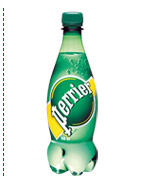
According to a story in The New York Times, “Perrier Plays With Its Venerable Brand to Draw Younger Fans.” As you can see above, Perrier (at least back in October, when this was news) has modified its labels to make puns – which is good if you shop by label and not by shape. The small, bulb-shaped green bottle has been in America since ’76. “Sexier,” “Crazier,” “Flirtier.” All cute. And worth $150 mill to Ogilvy & Mather Worldwide.

But hasn’t Heinz been doing the same kind of thing with its ketchup labels on and off for years?


I noticed that our local bottled water supplier, Ozarka (with its HQ in Greenwich, CT), has introduced a new and rather fetching 11-ounce bottle called “Aquapod” with a registered trademark. Neat shape, neat name...and Ozarka is targeting it like crazy to kids. It reminds me a bit of the classic Orangina bottle.

You can see more about it here, along with the associated kid-oriented site (which is frankly lame – and I’m not the target market, thank you.) I also bemusedly resent the bad kid being labeled “The Evil Baron,” Barrimore von Thirstmore III. Really.

Mark DeVries, the Amsterdam-based Brand and Packaging Development Consultant,
wrote about the O&M label campaign this way:

This attempt by Perrier to evoke consumer response is really just scratching the surface of what brand owners will be doing as they evolve their products to fit in with the changing culture of marketing communications.

As a packaging professional (and I dont mean graphic designer in the form of brand building or promotions which use packaging as the media) I believe it is time that marketers woke up to the fact that serious, in-depth packaging considerations coupled with appropriate product innovation will give them the edge they are searching for.

They really need to think out-the-box now, because just about anything is possible. Attending a packaging innovations fair in London, I saw some excellent examples that fit this bill. From curved 2-piece aluminium cans to mass-produced cartons that combine multiple curves within the confines of the traditional 6-sided carton (in this case it was about 3-and-a-half)…concepts like these require collaboration from a multitude of experts and a new generation of marketing professionals.


Now Perrier comes along with a really new, PET bottle: portable, unbreakable, recyclable – and looking somewhat like the plastic Coke bottle (except, of course, it’s green). Still, like Ozarka, Perrier is adapting its package, rather than its label, to fit new markets.

The classic problem in B2B, of course, is that so many of our “products” don’t have packages. In this day and time, perhaps we need to consider if there are ways to bring genuine new packaging technology and design into our arena – as many of the oil companies did years ago with their passenger car and heavy-duty motor oil containers.

Your challenge today (as DeVries puts it): Add two new Ps in the 4P marketing mix equation: Packaging and Personality. We don’t need more complexity, but it wouldn’t hurt us business marketers to think “outside the bottle” when we can*.


*No pun intended.

Tuesday, November 21, 2006

Family Time

A man in Houston calls his son in Sugar Land the day before Thanksgiving and says, “I hate to ruin your day, but I have to tell you that your mother and I are divorcing; thirty years of misery is enough.”

“Pop, what are you talking about?” the son screams.

“We can’t stand the sight of each other any longer,” the father says. “We’re sick of each other, and I’m sick of talking about this, so you call your sister in New York and tell her.”

Frantic, the son calls his sister, who explodes on the phone. “Like heck they’re getting divorced,” she shouts. “I’ll take care of this.” She calls Houston immediately, and screams at her father, “You are NOT getting divorced. Don’t do a single thing until I get there. I’m calling my brother back, and we’ll both be there tomorrow. Until then, don’t do a thing, DO YOU HEAR ME?” and hangs up.

The old man hangs up his phone and turns to his wife. “Okay,” he says. “They’re coming for Thanksgiving and paying their own way.”

With thanks to www.humormatters.com

Monday, November 20, 2006

Cell Surfing

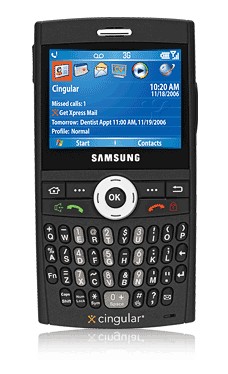
The tech and Christmas shopping news of the PlayStation 3 and the Nintendo Wii (sold out on its first day) has briefly distracted me from the idea surfing the Web via cellphone. That’s likely to be my own “next frontier” and I’m late to the party.

No early adopter, me.

I did wonder about market opportunities, though, for clients like EMS Group, with its successful launch of e-mailed newsletters. Fortunately, the Center for Media Research came through last week with a little help: a press release from comScore Networks about market use of cellphones to access the Internet on a country-by-country basis.

A much higher percentage of Europeans are surfing with their “handies” than we are in the US: 29% of European Internet users in France, Germany, Italy, Spain and the UK regularly access the Web from their mobile phones compared to only 19% of Americans. The highest mobile Web penetration is seen in both Germany and Italy, both at 34% of their cellphone-using population.

On the other hand, those percentages are misleading, number-wise. Our 19% represents about 152 million users – if I’m reading the numbers right. Germany, the highest of the Euros, has 32 million users.

The other big difference is in who’s providing the content. In the US, most users are accessing through online portals like Google, Yahoo! and MSN; in Europe, it’s the local mobile providers that are delivering the Web to European cellphone users.

Regardless of portal, though, the US’s 19% penetration leaves plenty of room for market expansion, as well as multiple opportunities for business-to-business marketers to use the cellphone access point to their advantage.

This past weekend, air-traveling to and from Chicago, I noted just how many people were juggling iPODs, Blackberries and cellphones. These prospects-on-the-move are open to exploring new options for sales message delivery.

You think I’m preaching to the converted? Far too many companies in the B2B space are not yet taking advantage of the portable technologies. What about making those first steps and examining ways to get customers and prospects to your site via telephone? Why don’t we examine incentives for getting customers and prospects to our websites via their cellphones, where we’re more likely to capture their attention these days?

I don’t have quite enough toys yet – but Christmas is coming.


Samsung Blackjack courtesy of Cingular Wireless.

Saturday, November 11, 2006

Today, Veterans...

A Proclamation by the President of the United States:

Through the generations, America's men and women in uniform have defeated tyrants, liberated continents, and set a standard of courage and idealism for the entire world. On Veterans Day, our Nation pays tribute to those who have proudly served in our Armed Forces…

Think about American soldiers and sailors who have served and are serving throughout the world, defending our freedoms. As long as we remember the names, they won’t fade away.

Paul Hirsch Baron, Emmanuel Katz, Herman Eisenberg and Sam Slavik. Phil Slavik. Norman Sabel and Sherman Sabel. Joel Hirsch Goldberg. Thomas Biddulph, Richard Fox, Bill Gay and Richard Sutter. AJ Smith and Paul Hoven. Alan Vera. Nathanael Charles Yonka, Jr. Hoi Nguyen and Ellis Alexander.
Plus names from the Gunroom (you know who you are): Paul Johnson, KCMO, and “Charlezzzzz” Muñoz. And me.

You're welcome to add names of your own to this list. It grows every year.

In a war 35 years back: 25-year-old aircraft . US Naval Station Sangley Point, Republic of the Philippines, circa1971. Photo courtesy of Loren Stiegelmar.

Friday, November 10, 2006

Lantern Won

If there’s one thing better than winning a creative award, it’s taking home a “Lantern” in front of a bunch of old business friends.

Last evening at the Houston Club, the Business Marketing Association (BMA, to you) conducted its 2006 Lantern Awards of Texas Gala Exhibition and Awards Dinner.

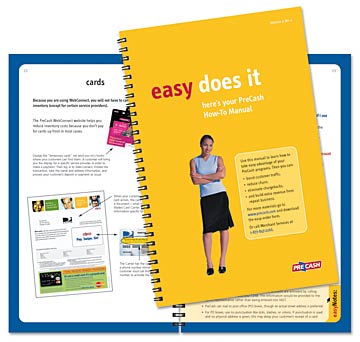
Principal Susan Reeves accepted the Lantern Award for Prism Design’s “How To” manual, created for client PreCash: the piece you see above topped its category.

Two other Prism pieces gained Awards of Excellence: the Premium Drilling ad campaign and the Baker Hughes Recruitment campaign. I wrote about the first of these here – and a post about the second is still to come.

Congratulations to the entire Prism Design team, especially Terry Teutsch – and thanks for involving me in the conceptualization and writing of all three prize-winners.

Plus a loud “well done!” to the BMA Lantern Awards committee for staging a terrific, well-attended event that moved lickety-split through a very large number of categories. It really was old home week for me: an especial pleasure to see so many friends and colleagues accept awards.

Thursday, November 09, 2006

Nancy's Joke

A trucker was driving along the highway and a sign comes up that reads LOW BRIDGE AHEAD. Before he knows it, the bridge is right ahead of him. And he gets stuck under it.

Cars are backed up for miles, both ways. Finally, a highway patrol car works its way up to the bridge and stops. The trooper gets out of his car and walks up to the truck driver…puts his hands on his hips and says, “Got stuck, huh?”

The truck driver says, “Nope – I was delivering this bridge and ran out of gas.”

Safety-related photo © Stan Feldman from Trainweb. All rights reserved. Joke courtesy of Nancy McMillan in farthest Maui, from “Best Smart-Ass Answers.”

Tuesday, November 07, 2006

Payer Marketing

You know and I know that a good marketer can look at a “thing” and figure out what the benefits are for our various audiences or prospects. Transparency, for example, answers a major complaint from healthcare’s stakeholders (including physicians) and it is very, very marketable.

The AMA Healthcare SIG’s November 16th event is your chance to find new marketing opportunities in healthcare information technologies. One of these is the transparency that comes from being able to access health-related information quickly and easily.

Did you want a preview of these coming attractions? Then I hope you read the Houston Chronicle article on Saturday, October 28th (Business, page D1 and D7) by Brett Brune, “The payers put to the test.” Texas PayerView Rankings from athenahealth in Boston are part of this Chronicle feature.

A speaker from athenahealth will be one of our seminar participants in just 10 days. (The firm spells its name using lower case.)

The “PayerView” rankings analyze claim performance data from more than 7,000 providers using the athenaNet® system database from athenahealth. It ranks national and regional health insurers according to specific measures of financial and administrative performance and medical policy complexity.

John Hallock, athenahealth’s Director of Public Relations, wrote me last week about visibility and transparency:

Healthcare is littered with vendors and organizations looking to communicate and market to a new service or device or functionality rather than the problems these services solve.

By marketing to a problem – defining it and bringing transparency to it – you can own it…then market your unique solution to that problem.

Transparency continues to be one of the dominant themes in healthcare today as it relates to doctors’ performance and costs; athenahealth felt that for the other major healthcare supply chain member, the insurer, there was virtually no actionable apples-to-apples data available to measure how well or poorly they perform one of their primary functions: paying for healthcare.

Our…recent Texas PayerView Ranking makes this various insurer and payer performance data publicly available…an important step in bringing transparency to all stakeholders in healthcare. The rankings and website are designed to allow physician practices, medical societies, media, consumers and payers to compare the rankings and performance of specific insurers by region.


Join me at The Courtyard on St. James Place on Thursday, November 16th, to find out how you can “own” this and other information technologies...for better marketing. Click here to register.

Monday, November 06, 2006

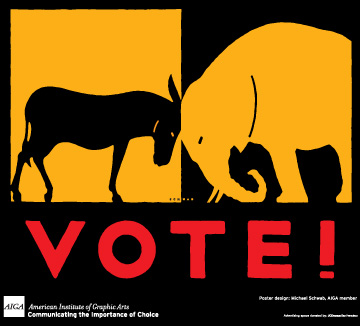
Vote Tomorrow!

Poster by Michael Schwab for a get-out-the-vote campaign by the American Institute of Graphic Arts (AIGA), created for the 2004 election. With thanks to Mike Lenhart blogging on the Graphic Design Forum. All rights reserved.

Saturday, November 04, 2006

VP Johnson

Even though he was a client here in Houston, Eric Johnson and I almost always ran into each other at Gatwick in the UK. He was traveling extensively for Landmark first, then Halliburton. I would be on my way to and from Dialogue International meetings. I remember when his boys started in scouting.

Now, he’s the new VP of marketing for the Halliburton Energy Services Group (ESG). His recent promotion has been announced in the October number of Offshore magazine. Previously, he served as the Director of Strategic Marketing for ESG. Before that, he was at Landmark.

Congratulations, Eric. In this case, the rolling stone has gathered a well-deserved step up in the corporate world.

Thursday, November 02, 2006

92% “Yes”

Let me tell you about Trevor Eade and his vision.

He’s Director of Marketing for EMS Group. He wanted to use targeted e-mail to send a series of “thought leadership” articles about the company’s capabilities to customers and prospects, and elevate the EMS brand worldwide.

His vision not only included the idea of positioning EMS Group on the leading edge of a critical sector of the energy industry, but the need to measure the results of the program. This is an “unusual” concept only to those people who don’t think measurement is an important component of marketing efforts.

Working with his management and colleagues, Eade created the corporate environment that supports this leadership approach. Working with Exact Target, an experienced provider of on-demand email marketing software, he put the structure in place to deliver these articles – and measure their impact on readers quickly.

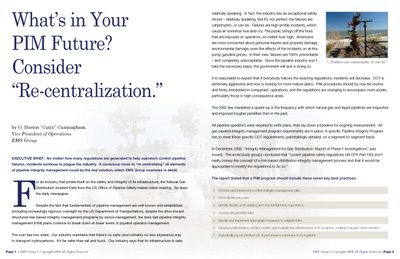
Then he had to begin generating the articles themselves (which is where I come in). I worked with “Cutty” Cunningham, EMS Group’s Vice President of Operations, to write it. It was an outstanding experience because Cunningham has such extensive knowledge of the subject.

On October 17th (one week ahead of his original schedule) EMS sent out the first in the new series of “thought leadership” e-mails: an article about re-centralizing pipeline integrity management. The cover e-mail said:

Welcome to the first in a series of monthly e-mails you will receive from EMS!

Over the past couple of months we have conducted a series of interviews with senior members of EMS Operations Staff, with the intention of delivering to you technically rich articles which you can use in your day-to-day business. EMS Group delivered 1701 e-mails to its subscriber base (subscribers, meaning customers and potential customers – who have agreed to receive EMS e-mail). One week later, via an integrated Exact Target online survey, Eade was able to summarize initial results.

  • More than 575 of those e-mails have been opened (as of today), demonstrating at 34% open rate – higher than the national average.
  • Overall EMS received a “whopping” 7.1% click through rate (meaning the subscriber clicked on a link within the e-mail – they may have gone to the EMS website or opened the PDF of the article – again significantly higher than the national average of 4%.
  • Subscribers forwarded the content of the e-mail to co-workers (via the Exact Target Forward to a Friend button).
  • 92% of the readers answered “Yes” to the question, “Did you find the contents of this e-mail informative?” (I love saying that: ninety-two per cent.)

The great numbers came with a plus: respondents also suggested what they’d like to see as future topics – a great range of feedback that will guide further elements of this project.

Well, Eade wrote me, “Thanks for all your efforts, in pulling this together!”

I think the kudos go to him and his team for supporting this form of communications: a “new media” approach that is successful because every element – the vision, the mechanisms, the cooperation, the content of the article and the feedback – was assembled into a precisely targeted program.

This is also a powerful argument against people who keep saying “Nobody reads anymore.” The fact is, professionals read articles that are professionally valuable to them. It’s up to us to make certain that the value is built in each and every time.

Email me and I'll send back a pdf of this first article. Thanks to Trevor Eade and EMS Group for letting me post the results - great job!

Sunday, October 29, 2006

Silly Walks

This morning’s HEART OF THE CITY cartoon shows precisely why Mark Tatulli is much loved around this house. Who else would not only remember the Pythons’ “Ministry of Silly Walks” sketch, but put it into a cartoon strip? Thanks, Mark, for keeping pop culture just a little wittier than Madonna’s next adoption and Paris Hilton.

Panel ® Universal Press Syndicate. All rights reserved.

Thursday, October 26, 2006

Mother’s Day

Did you hear the one about the new Marketing Director at an oilfield equipment company who, after interviewing several design firms to select a “marketing partner” for the company, hired his mother for the work instead?

Top of the world, Ma!

Tuesday, October 24, 2006

Healthcare Videos

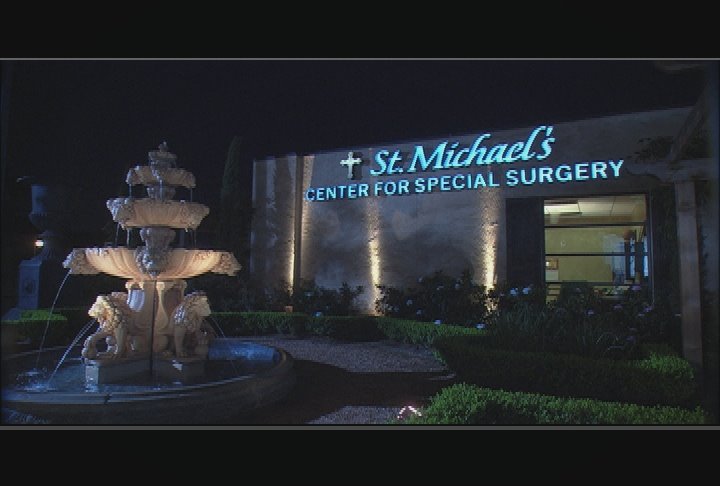
New videos for St. Michael’s Center for Special Surgery are in the can and appearing in doctors’ and patients’ hands throughout Houston. I was “above the line” – the copywriter for Locke Bryan Productions on these projects.

The establishing shot for each video (the night shot of the façade of the Center) is the tone-setter. Dr. Michael Brown has created an outstanding facility for specialized day surgery.

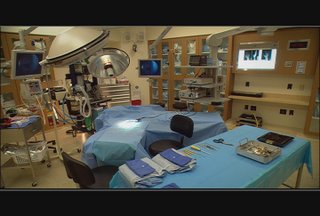
St. Michael’s is quite a combination: a surgical center than feels more like a luxury retreat than a hospital, advanced medical and surgical equipment, and one of the most dedicated group of healthcare professionals I’ve every worked with. In fact, both videos rely heavily on interviews with the nurses, OR technicians and support staffers. Even though you’re looking at two “facility” stills from the videos (above), about half of each video is filled with interviews with the St. Michael’s team.

Without prompting, every one of the staffers we interviewed for the videos emphasized that the patient always comes first. Edgar Duran, one of St. Michael’s surgical scrub technicians, said, “The patient is number one here…is of paramount importance. We want to make sure that the patient’s stay here is pleasant.”

Working with Stryker surgical lighting systems and C-arm fluoroscopy was worthwhile; working with the St. Michael’s people was better…and it shows in Locke’s close-ups. These are the money shots.

(I’m sprinkling movie-writing terms throughout – it’s an affectation, true, but fun! The St. Michael’s videos have strategies and objectives, just like other marketing communication projects: we left the character arcs and plot reversals for Hollywood.)

More than 15 years ago, Health Industry Today forecast that interest in freestanding surgical centers was expected to keep going up during the “next decade” because the number of both centers and specialized procedures was continue to grow. Now it’s 2006. The pace has accelerated, Have you seen the new specialty hospital or clinic that’s going up in your neighborhood?

Surgical centers offer additional ways for doctors to deliver healthcare to their patients, not stealing market share from major hospitals but supplementing the healthcare system with extra efficiencies and amenities – especially when a center like St. Michael’s raises the bar in terms of quality patient care and optimized efficiencies.

And when today’s healthcare system problems are genuinely offset by the people who deliver the healthcare, then making video’s for St. Michael’s has been an exercise in beneficial communications.

Thanks to Dr. Brown, Crystal Rideau and the staff of St. Michael’s, and to Locke Bryan and his team, too. I enjoyed adding two more examples to my healthcare portfolio.

“Music up. Fade to black.”

Coming soon: “Creating New Healthcare Marketing Opportunities by Leveraging Technology Innovations,” the upcoming AMA Healthcare SIG seminar. Opening Thursday, November 16th. Sign up at
www.regonline.com/110834 today.

Saturday, October 21, 2006

Carol Radsprecher

I have added the painting above to our collection – by adoption. It’s been a learning experience and a joyful one.

First, I better tell you about FAAN – the Fine Arts Adoption Network. It has been initiated by artist Adam Simon with a mission to connect artists and potential collectors.

Adoption means acquiring an artwork without purchasing it, through an arrangement between the artist and collector. FAAN’s goal is to help increase and diversify the population of art owners and to offer artists new means for engaging their audience. The copyright is owned by the artist, of course. The collector owns the painting itself.

First, there’s the “arrangement.” FAAN asked me to initiate an e-mail conversation with the artist whose work I selected. I wrote an introductory note to Carol Radsprecher about her painting, “Carcinaquaria with Toys.” She e-mailed back – from the Brooklyn Public Library. We’ve traded e-mails a dozen times, getting used to one another, exploring each other’s quirks.

She wrote me, “I am the most citified human on earth, at least as regards New York City. I was born and remain in Brooklyn, as my bio said; Brooklyn Heights, actually, which is very much Manhattan in terms of the inhabitants.”

Carol got her MFA in painting from Hunter College, CUNY, in 1988, after receiving a BFA in painting from Hunter in 1985. She’s painted for many years and had solo exhibitions in the Pierro Gallery at South Orange (New Jersey); the Garrison Art Center (Garrison, NY); Get Real Art Gallery (New York City); and Thompson Park Art Exhibition Series (Lyncroft, NJ). You can see her list of shows and juried exhibitions here and more of her pieces here.

Then I got the word from FAAN: Congratulations on adopting “Carcinaquaria with Toys” by Carol Radsprecher!

“Carcinaquaria” is part of an on-going series of oil paintings on canvas (like her “White Floaters” on this page). Sexuality is explored, as well as playing around with line. Carol’s statement on NeoImages explains the general background of the series:

Everything—everything—on earth has a shape, whether we can see it naturally or with the help of microscopes and other mechanical means. This idea that nothing physical can exist without having taken a shape (usually comprised of smaller shapes) is the impetus behind many of these paintings. I begin each painting with a series of repetitive lines, aiming for a complex field of linear and color-formed shapes.

“…playing around” is a key phrase – and it has taken me a couple of days to get used to having a genuine Radsprecher painting here in Houston.

If somebody (maybe Bob Fusillo) has already said that art teaches you about yourself, then I apologize to him or her. But continually looking at "Carcinaquaria" for the past three days has informed me considerably.

I discovered that I am used to, and gravitate toward, the dramatic in modern painting. Carol’s painting has less drama than I expected…but much more sly humor in it and that makes me smile.

Barbara insists the light comes from the lower left (if there is indeed an imaginary light casting shadows); I believe it comes from upper right. And maybe there is no light at all. The title helps: does it have something to do with smoking? I haven’t confirmed this yet with Carol.

Thanks to FAAN for facilitating and Carol for letting me adopt her painting and bring it south, because I'm increasingly seduced by its technique, its charm and its crafty ways.

“Carcinaquaria with Toys” by Carol B Radsprecher, oil on canvas, 20 x 20 inches. Now in the Collection of Richard Laurence Baron & Barbara Nytes-Baron.

Wednesday, October 18, 2006

Brand Murder?

There’s mudslinging. Character assassination. Sex. It’s not even about politics. It’s what’s happening to brands these days.

There has been a lot of chat lately about giving your customers some control over your brand. The “experts” have been saying that the youngest members of a company’s customer base aren’t likely to be persuaded by traditional interactions with a company and its products. You’re supposed to be experimenting, using new media, accepting new attitudes. Aren’t you?

An article by Rance Crain called “How Do You Get Control Back If You Cede Brands to Consumers?” was just published in the October 15th issue of Ad Age. Part of what Crain wrote:

Here's a question: With all this talk about consumers taking control of brands, how do you get control back again if you decide to change direction? Or once you open the gates, is your brand's destiny out of your hands forever?

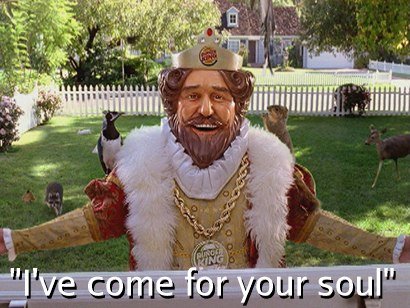
Right now, Burger King’s bad-boy promotions are built around its creepy King character and aimed at male teenagers. But that doesn’t give the restaurant chain much to build on if it decides to play nice or to expand its pitch to other target groups….Russ Klein of Burger King said turning your brand over to the consumer enables “social connectivity” as a means of empowerment.I couldn’t help think but what a dangerous game he’s playing.

The current BK strategy is for it to develop “social currency,” and Mr. Klein said to achieve this aim, “it's more important to be provocative than pleasant.”

Crain’s ultimate point is that Burger King is losing control of its brand, rather than providing that social connectivity. If you don’t believe that, go here (or Google “Burger King Commercial” and select “Banned Burger King Commercial” – but be careful, this one is more than a little disturbing).

You can watch the real Burger King commercials here – something for everyone, from chickens with attitude to the “Stackers Union” spot, or (in the BK® Table Guests section) conversations with models from Maxxim magazine.

It’s like Burger King Meets Las Vegas – you know, the place where what happens there stays there. Except for Burger King, it doesn’t: the results are all over the web, quite aside from your TV sets.

Michael Fielding, writing in the American Marketing Association’s Marketing News this month, says that brand owners are already…uh…screwed. “Companies no longer control their brands: Joe Chemo, Camel’s sickly camel stricken with lung cancer? Burger King’s mascot in an salacious visit to a couple’s bedroom? (See above.) An ad hoc commercial for Chevy Tahoe saying ‘global warming is here’?”

Don’t think, colleagues and clients, that the problem is confined to consumer brands. There’re many companies that have been hammered by what Marketing News calls “doppelgangers” – the websites and blogs that have been created by citizens with intentions either parodic or just plain nasty.

Not only media commentators, but bloggers too, have analyzed commercials from firms like Halliburton and BP (for example). These commentators reach a lot of consumers…maybe even your customers.

The current thinking: don’t fight back..mostly. Susan Fournier, quoted in the Marketing News article (page 15), says that fighting the doppelganger is against the entire new marketing paradigm; that co-creation is the key to creating brands.

I think you should find ways to fight. The Internet, blogs, texting – the new media offer ways for disgruntled people to strike at your brand and spread the word…often so fast that you may not even be aware of the negative imagery. You cannot control it, no matter how angry you and your senior management get. But you can moderate the negatives. Tell your side of the story. Interact with your markets in a positive way.

Do not, as Honeywell did years ago in response to a negative article in Fortune, pull all your advertising from the offending magazine(s) and go sit in your “quiet place.”

Do not let other people dictate how your brand is perceived. Fight the good fight.

Thanks to Rob Schoenbeck for kicking this one off. Photo taken from home.blarg.net/.../blosxom.cgi/2005/Apr/ with apologies. Google/Image for “Burger King” and you’ll see quite a few more.

Saturday, October 14, 2006

Minnesota Blues


Won’t you come home, Barb Baron?
Won’t you come home?
I’ve moaned the whole month through.
I’ve done the laundry, honey,
I’ve paid the bills.
I’ve plain been missing you.

You remember that sunny morning,
I dropped you off, to fly away and see your mom?
I know you love snow – I can’t take no mo’.
Barb Nytes, won’t you please come home?

Won’t you come home, Barb Baron?
Won’t you come home?
New Prague’s a long, long way.
You’ve done mom’s packing, honey,
So she can move.
What more can Rosie say?

You’ve had your snowfall, baby,
You’ve had your cold, and now that your sinuses are clear,
Please come back to me – it’s not so winter-y,
But Barbara, won’t you please come home…

That’s back to Houston, sweetheart…

Dear Barbara, won’t you please come home!


Louis Armstrong is turning in his grave. Atmosphere-establishing photo courtesy of www.homes.com

Friday, October 13, 2006

USS Clinton

By this time, you probably already know that the US Navy has introduced a new class of aircraft carrier into the fleet. The USS William Jefferson Clinton (CVS 1), above, set sail from its home port of Vancouver, British Columbia in June, 2006.

According to many reports on the Web, the ship is the first of its kind in the Navy and is a standing legacy to President Bill Clinton “for his foresight in military budget cuts” and his conduct while president. The US Naval Sea Systems Command (NAVSEA) emphatically denied that the new carrier is part of the Navy's “21st Century Aircraft Carrier Project.”


While this is not the first major US warship named after a president - e.g., USS Ronald Reagan (CVN 76) - it is the first carrier in recent memory that is constructed entirely from recycled aluminum. Its cruising speed (unclassified) is five knots. Its airwing is comprised of one (unarmed) F-14 Tomcat or one (unarmed) F/A-18 Hornet aircraft. Although they cannot be launched or recovered on the 100-foot flight deck, former National Security Advisor Sandy Berger says they “form a very menacing presence. Really.”

It does share the distinction (with USS Reagan and USS Jimmy Carter - see below) of being named after a person who was alive at the time of its christening. It was built in just 14 months and launched to pre-empt the introduction of USS George H W Bush (CVN 77), the Navy’s newest Nimitz-class nuclear-powered carrier, into the fleet. The Democratic National Committee declined to comment on Clinton’s hurried construction.

As a standing order, no firearms allowed on board. The 20-person crew is fully diversified and includes members of all races, creeds, sex and sexual orientation. An unidentified Naval spokesman denied there was an additional order that “if the boat is rockin’, don't come knockin’.”

The crew, like the much larger complement embarked on USS Jimmy Carter (SSN 23), is specially trained to avoid conflicts and appease any and all enemies of the United States at all costs.

USS Clinton will boast the ability to steer a course straight down the middle, but will have a tendency to veer to the left or toward large sums of money. Unlike the much larger Nimitz-class carriers, it will be powered by an unending supply of overconfidence, which perpetually replenishes itself; but may use hamburgers as an alternative fuel. Critics say that maintenance of this class of carrier will be difficult, as items will constantly disappear from the aircraft and wardroom furniture will mysteriously vanish.

An onboard Type One DNC Universal Translator can send out messages of apology in any language to anyone who may find America offensive. The number of apologies is limitless; though some may sound hollow and disingenuous, the Navy advises all apologies will sound very sincere.

The ship’s mission is not defined as a unit of national defense under the Navy’s “Forward…from the Sea” strategic deployment vision. Instead, in times of conflict, USS Clinton has orders to seek refuge in Canada. The ship will be initially deployed near the Democratic National Party headquarters on Capitol Street in Washington, DC, for photo opportunities; and can be used extensively for social experimentation.

The official launching included speeches by former presidents, the US Marine Corp Band and a wet T-shirt contest.

Old news revised. Thanks and a tip of the Hatlo hat to www.blustarchronicles.com and Paul Hoven. Writers for Conan O'Brien assisted in compiling this article.

Friday, October 06, 2006

Essential Punctuation

Dude – where’s my “s?”

In an otherwise interesting billboard on Interstate 10 just west of Studemont, whomever is doing the outdoor for the American Chemistry Council (ACC) has decided to follow a punctuation stylebook of his own.

The possessive form of Texas is supposed to be Texas’s.

The headline on the right should read, “$72 billion of Texas’s economy?”

The beginning of the question is “what’s essential2” on the left-hand side of the board.

It’s part of a new $35 million dollar public education campaign started about this time last year by the ACC, the trade association for the world's leading companies engaged in the business of chemistry. It’s designed to increase awareness of the chemistry industry’s contributions to modern life, from innovations in everyday products to the US economy overall.

The integrated “essential2campaign uses advertising, public relations, a new website and employee communications. It was created in conjunction with Ogilvy & Mather, Ogilvy Public Relations Worldwide and APCO Worldwide.

I earn part of my living from my work with the chemical industry and have done so for years. Still, it hasn’t escaped criticism: the ACC has been caught doing some not-quite-right things over the years.

Nevertheless, I applaud the campaign effort – particularly the billboard design, which has the potential (in other executions) to drive home strong economic facts about the contributions of the chemical industry.

In this one, though, the copywriter is using some less rigorous style book. Or the art director ran out of room on the board and decided to eliminate the extra “s” in Texas.

My dear old Fowler’s Modern English Usage (Second Edition) states on page 46: “…elsewhere we now usually add the s and the syllable.”

I also offer Garner’s recent Dictionary of Modern American Usage, page 509: “To form a singular possessive, add –‘s to most singular nouns – even those ending in –s and –x (hence witness’s, Vitex’s, Jones’s, Nichols’s.)”

Alright, so it’s the pea under my mattress today. But this is an important campaign for the chemical industry. Why screw up a perfectly nice billboard with incorrect English usage?


Campaign theme is Photograph courtesy of Paul Leigh. Materials © 2006 American Chemistry Council, Inc.

Tuesday, October 03, 2006

Raising Empyrean

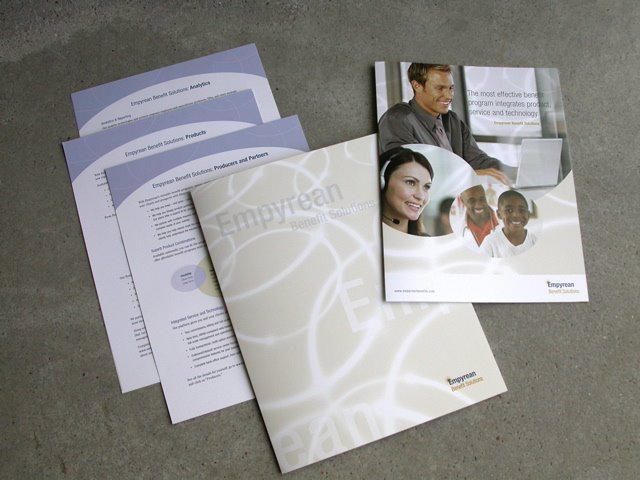
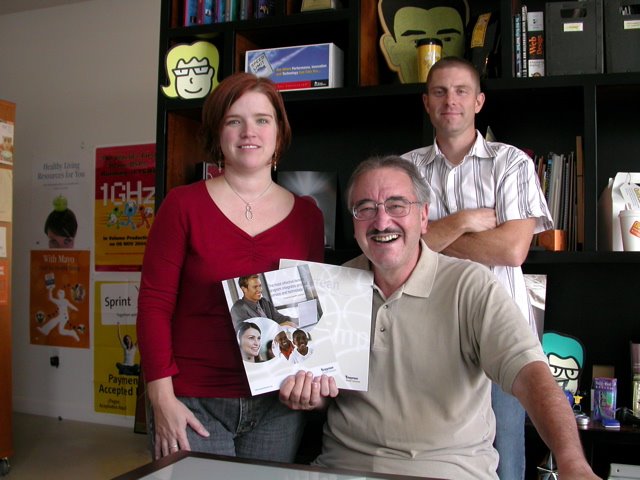
How do you transfer the vision of combining health benefit “products,” customer services and information technology to paper? You distill the convergence into words and graphics – like this new brochure set for Empyrean Benefit Solutions does.

Kathy Mackey, Empyrean’s Manager of Marketing Communications, wrote, “Thanks for creating the three-dimensional product, service, and technology idea. It has defined our company.”

Prism Design made it all look even better: a graphic concept capitalized on the overlapping nature of Empyrean’s interlocking implementation strategy. It brings an upscale look to the very crowded health benefits marketplace. At the same time, the design’s colors (corporate but warm) and sympathetic photos promote accessibility, whether you’re a broker, an HR manager or an employee.

Mackey continues, “Thank you and Prism Design for creating a perfect representation of Empyrean Benefit Solutions. The process of creating brochureware is not an easy task. We are delighted with the results. I value your experience, professionalism and dedication to the field.”

I worked tight with Empyrean to frame its vision in a discrete set of words. The company’s insistence that contemporary health benefits cannot be delivered cost-effectively except by information technologies is highlighted in these materials.

There’s no longer any real doubt that interactive health communication, patient-centric portals, online doctors’ visits, personalized disease management and wellness programs, individual education and web-enabled CRM will deliver cost and quality transparency to consumers – US healthcare has grown too complicated and too costly.

The Wall Street Journal is co-sponsoring a global forum about healthcare innovation and technology. The write-up is filled with jargon, like “Navigating the Information Age,” “eHealth and the Consumer Driven Movement” and “Patient Centric Approach.”

With Empyrean, we avoided the buzzwords. The brochureware has to speak to several audiences, including insurance brokers (now called producers), company and association benefits managers and individual consumers. We distilled the company’s message to simplify the presentation and raise its profile.

We also avoided a corporate slogan or tag line. It’s difficult enough to drive a new brand in today’s marketplace without extra baggage. I think the company’s name carries the message.

Simple is better than complex.

Bottom photo, standing: Anne Stovall, Designer & Terry Teutsch, Chief Designer, Prism Design, Inc. Seated: moi. Appreciation to the Empyrean Benefit Solutions team for perseverance and good words.