Sunday, January 15, 2006

Moose, Volcanoes

Cyclist, friend and former client Scott McKinley has settled into his new ConocoPhillips assignment in Alaska. Here’s his most recent communiqué to the Lower 48.

Dorothy once said, “Toto, I've a feeling we're not in Kansas anymore.” A quick look around is all it takes to get that Dorothy feeling:
  • Mountains and seawater everywhere you look
  • No traffic jams
  • Moose on the occasional street corner
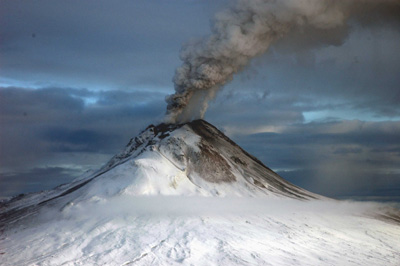
  • Volcanoes erupting (see Augustine above, 171 miles from Scott’s home).

After all the hubbub of traveling, moving and unpacking, it’s nice to finally settle back into something routine. Routine? Yes, I work Monday-Friday, 8-5. Just about everything else, however, is requiring a fun and challenging learning curve.

  • The New Job…anybody know the best key performance indicator for measuring drilling rig efficiency?
  • The Drive…an 18-minute commute unfortunately limits the opportunities to learn how to best spin the car through icy corners.
  • Wintertime Hobbies…hiking in snow requires certain equipment that you just don’t realize you need until you’re on the trail (like a basket on a hiking pole).
  • House Maintenance…when the neighbor comes by to offer advice on how I might better snow-shovel my driveway.

Back to Dorothy’s comment. Had Dorothy stepped off a plane in Anchorage, picked up a local paper and read the headlines, she may have looked down at Toto saying, “Toto, I KNOW we're not in Kansas anymore.” Here’re a few headlines from December issues of the Anchorage Daily News: helpful indicators this is a unique locale.

“Workers Prepare Ponds for Ice Skating” (12/2/05)…Anchorage’s Park System actually smoothes the frozen surfaces on ponds and lakes for public ice skating.

“Two Men Found Frozen to Death in Valley” (12/1/05)…Getting “fall-down” drunk in Alaska can have fatal effects, as these two blokes never made it inside their home before passing out from alcohol consumption; the cold temperatures did the rest.

“Beached Baby Beluga Whale Dissected in Public School Parking Lot” (12/1/05)…I thought it was cool to be able to dissect a frog during 9th grade biology…but a whale?!?

“High School Skiing Is Off To The Races” (12/4/05)…Spending your afternoons on the slope practicing your skiing under the auspices of a school-sponsored sport. Nice.

“In Juneau, All That Glitters Really Is Gold” (12/7/05)…Construction workers moving earth at a project stumbled on a vein of gold recently, setting off a rash of lunchtime prospecting. Ever think about prospecting over your lunch hour?

“Sunrise – Sunset 10:14 a.m. - 3:41 p.m.” (12/8/05)…The paper publishes this on its front page. The days do become short in the wintertime.

“Volcano Camera Lets Anyone Eye Augustine” (1/11/06)…One of the many ‘local’ volcanoes erupted on Wednesday with an ash plume. See it live
here.

Scott didn’t include it, but I know he’d want you to have your own set of instructions for collecting ash samples from the Augustine Volcano. So when you visit him, you’ll know just how to do it.

Image taken by Game McGimsey, USGS/AVO, January 12, 2006.

Saturday, January 14, 2006

Parker Again

If you have paid any attention at all to the politics of the past few years, you’ve noted that what people have written in the past doesn’t stay in the past. Thanks to the Internet, it’s still floating out there in cyberspace, waiting for someone to make an embarrassment out of it.

I suppose I shouldn’t have been surprised, then, when a friend of a friend (etc.) passed another one of Kathleen Parker’s odd columns, from April 2001. Her piece is about a BBC reconstruction of how Jesus might have looked, as you’ll see on the right.

Who knew the kinds of things that spilled out of Kathleen Parker’s pen? “The willowy, long-haired figure who in picture books attracted children the way Cinderella drew flocks of bluebirds and singing rodents now looks like the kind of guy who wouldn't make it through airport security.”

And “It's hard to suddenly embrace some new dude who looks mostly like my proctologist's great-great-great-great-great-great grandfather after a visit to Carmen's Hair Salon and Spa. Or Charlie Manson's first cousin. Take your pick.”

Two thoughts this morning. First, there’s a wide tonal gulf between the CNN article and Ms. Parker’s. This is the problem with ad hominem rants that you publish: they return like those long-dead, revenge-seeking sailors in “The Fog.”

Second, when you’re too egocentric -
or ethnocentric - life is bound to fool you. It’s a shock to wander through European museums and realize that those larger-than-life knights in shining armor were, mostly, about a foot shorter than we are.

One legacy of Western Civilization: it is difficult for us to reconcile the idea that God made man in his own image with the recognition that humanity comes in so many different sizes, shapes, and colors. Perhaps Ms. Parker has never Googled “Black Jesus?”


Image © BBC. All rights reserved.

Tuesday, January 10, 2006

Turkish Delightful

Unbelievable to find a quiet restaurant in Houston on a Friday night. Yet here we are at Turquoise Grill with Mary Jo and David Martin; owner/chef/host Yilmaz “Jim” Dokoyucu (left) and his father; Barbara and I. Nobody else. It isn't instantaneously noticeable. Although the address is 3701 Kirby, Turquoise is actually just around the corner on Norfolk, east of Kirby – the site’s map is more reliable than Mapquest’s. The simple, attractive place is dominated by Jim’s brick oven – and his gregarious nature.

Houston is filled with Middle Eastern restaurants, many of them very good. This is Turkish, similar in some ways (e.g., hummus), slightly different in others, with some touch-ups added by Jim. The dishes are rich and savory, not especially spicy-hot, with an abundant use of vegetables and everything FRESH.

The bread is fresh-baked. The stuffed grape leaves we had as an appetizer are a familiar menu item, but Jim’s combination of rice, pine nuts, olive oil, and herbs was wrapped in tart, vinegary leaves that were palate-teasing. The fried filo pastry rolls called Sultan’s Cigars, Sigara Böreği, are a specialty of Antalya – Anatolia – on Turkey’s “Turquoise Coast.” They are stuffed with feta cheese and parsley…and melted in the mouth.

It’s true, several of us had shish kabobs. They were nice. But two of us opted for the manly, rugged, lamb version of Jim’s Taurus Mountain Stew, Toros Güveç: fresh tomatoes, chunks of garlic, strips of red and yellow peppers and a homemade sauce baked in small clay pots in that clay oven of his. Made fresh as well (about 20 minutes), they came out temperature-hot but not overtly spicy, and rich-tasting. Minor complaint: the mouths of the pots are a bit too small to dip the fresh bread in the sauce…a minor matter for someone who’s not afraid to look clumsy. And after all, who was there to see me?

Unlike most (but not all) Middle Eastern restaurants here, Turquoise Grill has a modest selection of wines. Many of these are from Turkey's Kavaklidere Winery originally established in 1929 near Ankara, but under “new” management since 1989 and the country's largest winery.

The three we sampled and drank (one white, two reds) are modestly good. But I recommend the Öküzgözü varietal – somewhat similar to a Shiraz – for the heartier stews.

You won’t see many restaurant reviews on Signalwriter, Turquoise Grill is worth a visit before it finds its audience and gets too busy for Jim to explain everything. So? Go.

Thanks to the Atami Hotel for additional grape information.

Monday, January 09, 2006

Brand Stuck

Your company’s clipping right along. You’re pedal-to-the-metal, lights flashing, siren blaring. If you were a K-9 unit, your dog’s head would be out the window, ears flying in the wind.

Suddenly, you’re not moving at all. Morale collapses. Sales stop. What happened? And you think (cupping a hand over your mouth and exhaling), “Could it be…my brand?” Not likely, according to Bob Lamons. He thinks B2B marketers have a hard time with branding, ‘cause a lot of business marketers started on the tech side of their businesses, like engineering or science. In his view, they tend to fixate on “features and benefits.”

I’ll support Bob this much. In the classic Features-Advantages-Benefits (FAB) triad, a large cohort of clients rush to F and A, but forget about the B. Customers do want to hear about the B – what’s in it for them? Lamons does equate brand with emotion: B2B buying decisions are made as much today by gut feel as the result of some detailed evaluation.


Susan Kirkland, veteran ad designer, responded, “Brilliant – what says we can’t manipulate that ‘gut feel’ much the same as we manipulate a hernia? Isn't that what ‘grab 'em by the balls’ means? Pardon my French.”

In a Wall Street Journal piece last month, Leslie Gaines-Ross, chief knowledge and research officer (CKRO – whew!) for Burson-Marsteller reported that in an ongoing survey of 685 global business leaders in 65 countries, 81% reported that there are more “company reputation” threats today than two years ago. She listed seven warning signs of a company reputation in trouble. Of these, Number 6 was the most telling to me: “Employees stop telling positive stories about the company.”

(You may be particularly vulnerable to the brand attack blog. One example: “Verizon Sucks” entered into Yahoo nets 473,000 sites dedicated to exposing brand deficiencies.)

It takes an internal audience to repair this kind of damage. Your stakeholders ought to believe and should have real reasons to do so. Fast damage control: re-energize your internal audiences and unleash the troops.

Quick, Robin, back to the metaphor! You’re hubcap deep or out of gas. You have to get out and push. And if you live in a nice town, you suddenly find that a couple or three or half-a-dozen other people have gotten out of their vehicles and are helping you muscle your car out of the muck.

In B2B buying decisions, the company behind the product or service is a genuinely critical decision factor. Re-build an emotional attachment with customers and prospects, by all means.

But start with your managers, your employees and their families, your retirees, your stockholders. When they believe, when they are missionaries (or in today’s term, “marketing buzz agents”), you not only get help that advertising and PR can’t buy. You re-empower your company with a potentially inexhaustible supply of emotional energy that’s worth millions.


Sunday, January 08, 2006

Spoiled Bloggers

On your left is Kathleen Parker, syndicated pundit. She recently penned a piece titled “Lord of the blogs” that appeared in the Orlando Sentinel. You should read the entire column here.

The Houston Chronicle reprinted it under a different title on January 1. I read it and sent the editor a letter. It appeared this past Friday, January 6, with minor edits. I made several arguments:

In Kathleen Parker's column about blogs, she says we can't silence the ‘Spoiled and undisciplined’ blogs, though we should ignore them not only for the sake of civilization, but for "the integrity of information by which we all live or die."

This is po-faced hooey. Readers of newspapers (her chosen profession) are canceling their subscriptions in significant numbers, not least because many papers have been found guilty of adjusting facts and presenting partisan opinions. Unlike the news/opinions publications of the past 150 years, though, the Internet greatly empowers access to, and creation of, alternative viewpoints – even when sometimes expressed unwisely.

Does her wish to silence the spoiled and undisciplined extend to the celebrity magazines, too? The supermarket tabloids?

As I tried to come to grips with Parker's column, my wife made the most telling point: Unlike the vast majority of bloggers, she gets paid for her opinions. Unlike her ‘new enemies,’ Freedom of the Press appears to apply only to those who earn a salary at it.

I appreciated seeing my letter in print. (PT Barnum said, “I don’t care what they print about me as long as they spell my name correctly.”)

What I genuinely object to, however, is Parker’s apparent presumption that only paid journalists “who suffer near-pathological allegiance to getting it right” are qualified to dispense news and opinions. They can communicate with us – we aren’t qualified to communicate with them.

Yes – this is about communication and (by extension) public relations and advertising. I think the Worldwide Web and the Internet enable more access to information than at any time in human history. Blogs are one new form that lets us communicate more broadly, influence opinions…even promote products and services.

So, does Parker contend that journalism is automatically more worthy? What happens when, say, PR-type communications are used to transmit editorial-style messages? Are the newspaper writers who pick up news releases journalists or flacks? So read her column. Read my letter. Let us both know if I am over-reacting. (E-mail Ms. Parker at kparker@kparker.com.)

Kathleen Parker photograph and column © 2005 Tribune Media Services, Inc.

Saturday, January 07, 2006

Prisoner’s Dilemma

How in the world does the Prisoner’s Dilemma game theory relate to Houston traffic jams? And cooperating with other freelancers or ad agencies on a client project?

Oh-so-familiar scene yesterday: bumper-to-bumper coming back to the office from a meeting. A 24-mile cross-town trip that took an hour and a half in the late afternoon – I made virtually the same trip in 20 minutes at 11PM last evening.

Patience and politeness are the keys to surviving Houston t-jams. Despite the potential for anger and frustration, the drivers around me were courteous (mostly), refrained from blocking intersections (in the main), let other drivers squeeze in front of them when the lanes narrowed (generally).

It wasn’t ‘til this morning that I realized Houston drivers are pretty good at playing the Prisoners’ Dilemma. Click above to read the Wikipedia article about it. Briefly though, two prisoners can gain better jail sentences if they cooperate than if they rat each other out – even though ratting out is the most common and self-interested result, and one prisoner goes free.

By chance, I have read about this zero-sum game in two different novels this week. Bright and early today, I found a fine description of its traffic application in one of them, the 2004 Kim Stanley Robinson book Forty Signs of Rain. One of the main characters is stuck on the Washington, DC, Beltway:

“By and large Beltway drivers were defectors. In general, drivers on the East Coast were less generous than Californians, Frank found. On the West Coast they played tit for tat, or even firm but fair, because in moved things along faster…and so in California cars in two merging lanes would alternate like the two halves of a zipper, at considerable speed, everyone trusting everyone else to know the game and play it right.”

Houstonians, I think, make the same kind of choices in traffic back-ups, generally cooperating out of some instinct that “if we all could just get along,” we’d move faster and generally do despite the horrible traffic. (Except for the bubbas in giant pickups who cut out of the lanes and across the boundary strips to reach a sort of freedom on the access roads.)

Transfer this example to competing ad agencies or freelancers who are teamed on the same client project. If you play the zero-sum game and betray your team-mates, you will do better. You will get more than your share of the work, more of the budget…or even all of it. The other guy (or gal) is the loser, cut out of the opportunity to contribute value and earn a fair share of the money.

At some point, this is going to catch up with you. You will finally run across a client who doesn’t like this kind of behavior and won’t reward it. You will become known as a selfish SOB who doesn’t play well with others. You may make more in the short term but, as Roger Edmonson puts it, “Pigs get fed; hogs get slaughtered.” Eventually.

Oh yes, this is goody-two-shoes stuff. And we all know a lot of practitioners who have retired to their Galveston beach homes or Hill Country hideaways behaving just this way. But if reputation is one of the things you’re selling (as a freelancer), then fairness and amiability will guide your actions. Cui bono? Who benefits? The client does. Maybe you do, too. Happy Saturday.


© Photographer Sparky 2000 Agency Dreamstime.com.

Friday, January 06, 2006

The Angel

This story from Bob Fusillo in Atlanta didn’t arrive in time for the holiday itself. But today is Epiphany, which signals the end of the 12 Days of Christmas. (I have known him for so many years, I’m certain it must be true.)

Santa was in a bad mood. Two reindeer were sick. Several gnomes had hangovers from too much wassail and couldn't help pack presents. Mrs. Claus was on the warpath…something about muddy deer tracks in the kitchen. Santa had heartburn from all those cookies.

Then there was a knock on Santa’s door: An angel appeared. “Here’s a nice Christmas tree for you, Santa. Where should I stick it?”

Which is why you always see an angel on the top of a Christmas tree.

Thursday, January 05, 2006

Hook 'Em!

What a game! Did you watch it? The University of Texas Longhorns edged out University of Southern California 41-38 and clinched the National Collegiate Athletic Association football championship at the Rose Bowl last night. The victory marks UT’s fourth national title and its first since 1970. Texas completed a perfect 13-0 season, the most wins in school history.

I traded text messages with Linda and Greg Krupps, who were at the game in Pasadena. Much tension – much fun. The UT Tower in Austin was lighted utterly orange last evening to celebrate the Horns’ national championship victory at the 92nd Rose Bowl game in Pasadena, Calif. The Tower will be lighted entirely orange with the #1 displayed again today, and it will stay lit through the weekend. I guess most of the UT alums will stay lit, too.

Hook ‘em, ‘Horns!

Tuesday, January 03, 2006

Web Pusher

Everybody wants credit for inventing the Worldwide Web and the Internet – even Al Gore. Despite these claims, the WWW has some genuine fathers. I always felt that a Minneapolis-based science fiction writer, Gordon R. Dickson, pre-visioned it in 1984, when he published a novel about a galaxy-wide confrontation called The Final Encyclopedia. Amazon describes it this way:

“At the center of this galactic conflict is the Final Encyclopedia, a huge space-station in orbit of Earth, that contains all the knowledge of the human race. Whoever controls the Encyclopedia will control the fate of humanity.”

Nobody that I recall imagined the space station-load of all knowledge would include advertising. And you hardly need to be told that the Internet is a major advertising medium. I’m sharing a couple of key points because some industrial firms might not be giving it strong enough consideration in 2006.

There’s a lot of hoopla about “consumer advertising” rather than business-to-business advertising on the Worldwide Web. The financial facts are pretty important. See the latest figures here. National advertisers’ 2005 budgets only grew 3.7% overall in their traditional media (vs 2004), but grew 15% in Internet expenditures. The big guys are spending about $8 billion on Web advertising in one form or another. In 2006, the consumer advertisers are expected to grow that spend another 10%...the highest rate of increase among all advertising media.

Most business-to-business advertisers haven’t come anywhere close to matching that rate of increase – except for the very largest.

I think there’s a good reason for this and you can leave aside the “old guys don’t understand new technology” stuff. It's trite. Author and marketing communications futurist Seth Godin spoke to an interviewer recently who asked two questions:


1. Should every business use the Internet to communicate?
2. What are the basics of an Internet communications strategy?

Godin said, “You should only use the Internet if you want your communications to be FAST and you want to reach LARGE NUMBERS with no intermediaries. If you can't handle that, though, you shouldn't try.”

Sean Finnegan, US director of i-agency Digital/OMD, modifies this in the right direction. The Web is a mass medium, he says – but it’s an excellent way to reach an engaged “consumer” looking for a deeper bond with your brand.

In tightly focused B2B markets such as restaurant management software or drilling muds, for example, companies do use the Internet to communicate, but most often it’s via their Web sites – a pull medium when they can get their specialy focused prospects and customers to view them. They do not make as much use as they could of “push” advertising on the Web...and they could use it if it is strategically and tactically well-executed.

Unlike Dickson’s imagined encyclopedia, there is no “final” in the expanding world of online media. It’s devilishly hard to stay ahead of the curve. For most of us, keeping up is way better than catching up.


Advertising professionals like me want to continue to support clients effectively. This year, I’m going to be an enabler. I want to (first) show clients how to get more out of the digital channels they are already using, to push their prospects and customers into closer, more valuable relationships. And (second) I intend to help them implement these new and continually changing channels. Happy New Year’s resolution.

Book cover © the publisher. All rights reserved.

Friday, December 30, 2005

Time Piece

Just in time for the new year, Deepwater Specialists, Inc. (DSI) has a brand new ad. With concept and copy by Richard Laurence Baron – that would be me – and Joe Woods, art direction and design by Steve Stanley, DSI has launched an advertisement that's deceptively simple and different than the normal run of ads in the Oil & Gas trade mags.

There’s a way-too-familiar ad format in this market. It’s called “the rig in the sunset.” Sometimes, it seems like every company in the oil patch, whatever its specialty, has an ad with an oil rig or a platform, on or offshore, with either a sunrise or a sunset in it. And it does run in waves.

There are often creative upsurges that make the advertisers (and the publications) sparkle…and plenty of good advertising practitioners that make ads really stand out, inside and outside of the oilfield companies.

Then the dramatic breakers subside, and the industry’s tide turns to showing photos of oil rigs or production platforms again. Sometimes, this is warranted. Example, when a particularly significant advance in technology should be shown. For the oilfield service companies, this is often more difficult, because they don’t have the products per se…they do the work (which leads to cliché #2, crews in hard hats working on the rig or the platform).

DSI has become the world’s leading provider of the arcane and extremely complex service of commissioning facilities that are going to produce oil and gas from wells in some of the deepest parts of the ocean. You can read more about it here. But the facts are simple.

1. Offshore oilfield facilities are among the most complicated “machines” created by human beings today.


2. Exceptionally expensive, they have to operate efficiently and safely in very tough ocean conditions.

3. The longer it takes for a deepwater facility to get built, prepared, towed into position, and producing hydrocarbons (sometimes years), the more expensive it is for the facility owners and operators.

That’s why the ad’s timepiece doesn’t show minutes and hours. Look closely. You’ll see that the watch face shows days, weeks, months, and years – with a window that displays the cost of getting the facility into production.

Time is money…lots of it. Instead of focusing on what its services look like, DSI’s new ad spotlights customers’ major preoccupation: how long will it take before the facility produces “first oil.” The benefit: DSI helps shorten the time involved.

Congratulations, DSI, on the newly launched ad – and thanks for letting me be part of the effort.


Ad courtesy of Wood Group. All rights reserved.

Thursday, December 29, 2005

Hanukkah Feedback

Before I posted “Achieving Hanukkah” (see Sunday, December 25), I wrote to Leigh Lerner for some historical checking. My oldest friend, he’s also a Rabbi in Canada. The rest of this post is his.

“Please excuse the slow response. We just returned from Israel last night on a flight plan which could only be described as anti-Semitic. (Hotel wake-up, 12:30 AM, leave hotel 1:30 AM, leave Ben Gurion 5:30 AM, arrive Zurich 9 for 4-hour layover, arrive home with luggage in hand at 5:30 PM, precisely 24 hours after the wake-up call.)

“It was so punishing that I now believe all my sins are forgiven for the year to date, so I plan to shorten Yom Kippur services by 25%.

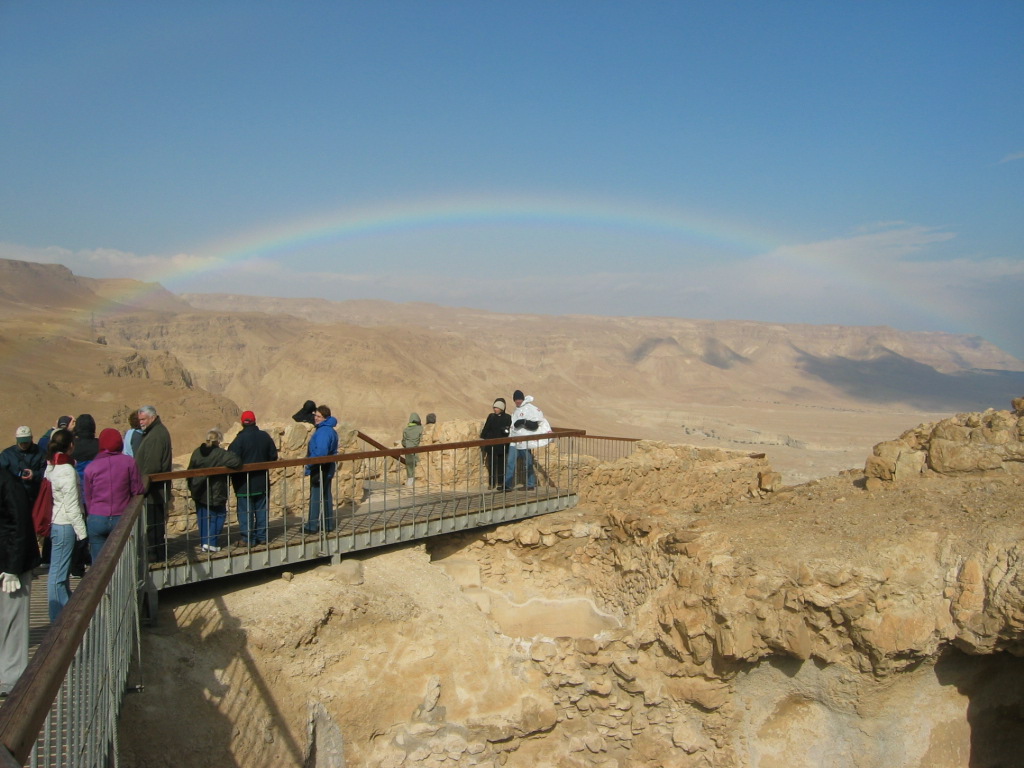
“Weather department: on our visit to Masada, it rained. I’ve got shots of rainbows taken from its heights (see above). The place averages 40mm a year.

“My math on Alexander’s date agrees with yours, 3429. The ‘since creation’ dating system is a product of medieval scholarship, however. It’s usually listed as (e.g.) 5766 A.M., anno mundi.

“Your question brings up a very little-known fact: Alexander himself is the reason for a certain Jewish dating system, minyan ha-shtarot, the dating for documents: Not the arrival of Alexander in Israel, but the control of it by his general Seleucus, progenitor of the Seleucid dynasty centered in Syria and Babylonia, was taken as Year 1 for this dating system, which is 312 BCE. There are still Jewish communities which date all their documents, like Jewish marriages and divorces, by this system. For an interesting reference which concerns the Jews of India, see
http://emganin.tripod.com/home/id3.html.

“Back to Israel: there’s so much new in the state that it’s dizzying. Hanukkah’s town, Modi’in, is probably Israel’s 5th largest city now, soon to pass Be’ersheva. It’s right between Tel Aviv and Jerusalem on the freeway, and a fast train is going in that reaches them both, so many secular Jews are leaving Jerusalem to live there (it’s only about 22 miles away, and you can see Tel Aviv on the far horizon). Couples who have one spouse working in T.A., and one in Jerusalem, live there, too. Last time we visited, 10 years ago, Modi’in did not exist as a city.

“We walked the entire length of the Western Wall, thanks to a tunnel that was dug alongside it. This is the tunnel the Palestinians claim goes under the Temple mount, violating their territory. I can testify that it does not go under the Temple mount. You can see Herod’s stones the entire length of the way. We had one fellow with claustrophobia who barely got out, so we had to walk through the Muslim quarter, as opposed to turning around and going back through the tunnel. The army accompanied us. Such is life there.

“We saw the fence/wall while traveling a new toll road which bills drivers via transponders. It abuts the Green Line for many miles, so the fence/wall is quite evident. It’s mostly a fence with electronic movement detection equipment, but when it approaches a town, it becomes a wall that looks a lot like sound barriers on a typical US urban freeway. Road blockades are more of a problem for Arabs, I should think, and they exist wherever there is transit from Israel to potential Palestinian Authority territory. Having traveled the length of the Jordan River to return to Jerusalem, I was glad to see the blockades in place for our own safety.

“P.S. There has long been an Israeli fence along the Jordan River, and the Hashemite Kingdom of Jordan, according to all accounts I heard, loves it. It keeps the Palestinians out of Jordan and saves them from having to declare more Black Sundays. All best for lots of light, Leigh.”

Wednesday, December 28, 2005

Propertied Portfolio

For three decades, I worked in them. Office buildings. Some were high (though not as you might say “skyscrapers”). Some were low. Some attractive, some not so much.

I’ve stayed in hotels – I’ve done that. Multi-star, big-name hotels here and abroad. Discrete art hotels. Tiny, off-the-main-drag hotels, like the one in Paris with a shower stall so compact that I had to turn off the water and get out of it to retrieve the soap I dropped.

Despite all the time I’ve spent in advertising, though, I never had commercial properties or hotels as clients. Architectural and building products, yes indeed. The buildings themselves, no.

Until this year. I’ve added a new category to my portfolio, thanks to relationships as near by as Katy and as far away as Russia. With the help and cooperation of some very talented people, my sample case is a little richer with TV commercials, brochures, and ads.

One on the newest (left) is an ad for Laguna Bay Condominiums on South Padre Island. Others have been for classic restored properties like the five-star Corinthia Nevskij Palace Hotel in St. Petersburg: quite a place, which I hope to visit sometime soon.

Commercial property people and hoteliers have internalized a wealth of knowledge and understanding. You may not think it’s rocket science…but it is specialized and based on years of experience. I’m looking forward to learning more about all of it.

I also look forward to trying more of those hotels I mentioned. Even the one in London that had common bathrooms for each floor rather than one per room. (That’s another story; Roger Edmondson will be glad to tell you about it.) Meanwhile, happy Wednesday.

Tuesday, December 27, 2005

Company Policies

File under “Labor, Dignity of.” Entitled 2005 Most Unbelievable Workplace Events, global outplacement firm Challenger, Gray & Christmas, Inc., has released the following copyrighted list of stories that are most likely to make you ask, “Can a company actually do that?” Or, “You can’t beat these stories with a stick.”

• The Whine-Free Policy. A German company initiated a strict no-whining policy. Negative Nellies and other boat rockers are under a two-moans-and-out rule. According to the company, several workers have quit and two others have been fired for violating the whine-free policy.

• No Slack for War Wives. A Michigan woman was fired from her part-time receptionist job after failing to show up for work the day after seeing her husband off to war as a National Guard member.

• We Are Family, Only. DaimlerChrysler’s transmission plants in Kokomo, IN, have designated 80% of their employee parking as reserved for Chrysler vehicles only. Any non-Chrysler vehicle parked in a reserved area will be towed to Indianapolis, 50 miles away, where the employee will have to pay $200 to get his or her car back.

• Executive Whipped into Shape. An executive for a foundation that funds heart disease research was accused of embezzling more than $237,000 and using some of the money to pay for the services of a dominatrix.

• Rescue Squirrels on Your Own Time. A woman says she was suspended from her job for spending too much time trying to rescue a squirrel trapped in the ceiling of the library where she works.

• Anyone Desperate For a Job? The National Labor Relations Board refused to strike down a security company’s rule that prohibits employees from getting together away from work. The policy forbids workers from going to lunch together, attending each other’s weddings, or doing anything else they might want to do with each other outside of work.

• Productivity vs. Religion: And the Winner is… Thirty Muslim workers were fired from a major computer manufacturer’s Nashville, TN, plant for adhering to religious doctrine that requires them to pray daily at sunset.

• Forgot To Wrap That Can! A worker with a good record and no problems with his supervisors was unexpectedly fired from his job with a beer distributor. While no reason was given, the firing occurred on the same day a picture of the worker drinking a competitor’s beer appeared in a local newspaper.

• No Hablas Español. Two Spanish-speaking hair stylists in Chicago, IL, claim in a federal lawsuit that the company they worked for strictly banned the use of Spanish, even when employees were on their breaks. A sign at the establishment read, “Speaking a language other than English is not only disrespectful, it’s also prohibited.”

Thanks to Challenger, Gray & Christmas, Inc., you can find additional employment info about the workplace here. And continued seasonal wishes to workers of the world.


“Confrontation between a policeman wielding a night stick and a striker during the San Francisco General Strike.” By an unknown photographer, 1934, from National Archives, Records of the US Information Agency, with appreciation.

Monday, December 26, 2005

Boxing Day

It has dawned cool and utterly clear. The moon is waning and it’s Boxing Day. It puzzled the Anglophile in me for many years. Being primarily an English (and Commonwealth) holiday, Elaine Berger has a lovely British explanation here, but Stephen Bentley has made understanding it easy in today’s “Herb & Jamaal” comic strip.

The Pastor, unlocking the poor box, says, “Today is the Feast of St. Stephen, the first Christian martyr...a day some folks call ‘Boxing Day.’ Some say the term comes from opening the church poor box and giving to those in need.” Herb’s response is, “I thought it meant the day that people fight to exchange gifts at the mall.”

Me - I always think of the carol:

Good King Wenceslaus looked out on the Feast of Stephen,

When the snow lay round about, deep and crisp and even.
Brightly shone the moon that night, though the frost was cruel,
When a poor man came in sight, gathering winter fuel.

“Hither, page, and stand by me, if you know it, telling,
Yonder peasant, who is he? Where and what his dwelling?”
“Sire, he lives a good league hence, underneath the mountain,

Right against the forest fence, by Saint Agnes’ fountain.”

“Bring me food and bring me wine, bring me pine logs hither,
You and I will see him dine, when we bear them thither.”
Page and monarch, forth they went, forth they went together,
Through the cold wind’s wild lament and the bitter weather.

“Sire, the night is darker now, and the wind blows stronger,
Fails my heart, I know not how; I can go no longer.”
“Mark my footsteps, my good page, tread now in them boldly,
You shall find the winter’s rage freeze your blood less coldly.”

In his master’s steps he trod, where the snow lay dinted;
Heat was in the very sod which the saint had printed.
Therefore, Christian men, be sure, wealth or rank possessing,
You who now will bless the poor shall yourselves find blessing.

Boxing Day is the second of the Twelve Days of Christmas. When you add in Hanukkah (see post below) this year, and Kwanzaa, makes for a very long season of holy days and holidays. Makes it easy to begin keeping Christmas in your heart for all of 2006, don’t you think?


Sunday, December 25, 2005

Achieving Hanukkah

Happy Hanukkah, everyone. Most Americans know there’s a “Jewish Christmas” that comes around this time of year. Many Americans and virtually all Jews know tonight is the start of the Festival of Lights – the night we light the first candle in the menorah.

Most Jews can tell you why Hanukkah is celebrated for eight days. It’s here, but the short form goes like this. Alexander the Great conquered Syria, Egypt, and Palestine in 332 BC – that’s circa the year 3429 in the Jewish calendar (if I’ve got my numbers right). He allowed the conquered peoples to keep practicing their own religions.

More than a century later, Antiochus IV, one of Alexander’s many successors, controlled the region. In 167 BC, he occupied Jerusalem; decreed the abolition of the Jewish religion; and desecrated the Temple by requiring the sacrifice of pigs, a non-kosher animal, on the altar. Jews who resisted were subject to execution.

Several Jewish groups, including one led by Judah Maccabee and his four brothers, revolted against both assimilation of Jews into Hellenistic culture and oppression by the Seleucid Greek (now mainly Syrian) government. The revolution succeeded. The Temple was rededicated. The priests discovered there was very little oil left that hadn’t been defiled by the Greeks. The oil was needed for the Temple’s menorah, which was supposed to burn throughout the night every night.

Here’s the spine of the traditional Hanukkah story. There was just enough oil to burn for one day. But miraculously, it burned for eight days, the time needed to prepare a fresh supply of oil for the menorah. An eight-day festival was declared to commemorate this miracle.

Judah Maccabee is a hero to every Jewish kid who’s every gone to religious school – we learn about him, sing songs about him. But the same Web source, Judaism 101, will tell you, “Note that the holiday commemorates the miracle of the oil, not the military victory: Jews do not glorify war.”

With respect, this is disingenuous. Judah conducted what some historians view as a brilliant guerilla war against the Syrians for two years. He and his tiny Jewish army defeated Syrian generals time after time, culminating (for the moment) in his victory at Beth Zur near Hebron in 165. After Beth Zur, he captured Jerusalem and liberated the Temple.

Two years of tough fighting led to the miracle of eight days’ worth of oil.

This wasn’t the end of the story – the Jews had to keep fighting. Judah was killed in the Battle of Elasa in 161 BC. His brother, Jonathan, took up the struggle and the conflict continued for 18 years more before he was killed. Another Maccabee brother, Simon, became King of Judea in 143, under the Syrians. But there were repeated invasions and sectarian violence until Rome stepped in and imposed peace on Palestine in 64 BC.

Most of you won’t remember what Franklin Delano Roosevelt called “The Four Freedoms.” (His January 6, 1941, speech is here.) The second one is the freedom of every person to worship God in his own way – everywhere in the world. Take a good read and tell me we shouldn’t be thinking about our servicemen and servicewomen tonight, when we light the first candle, and for all the nights thereafter.

There’s often not much glory in war. But the real lesson of Hanukkah is lost on anyone who doesn’t believe in fighting for freedom.

Additional reading? Try Eliezar Segal here and here. And best wishes for the entire Festival of Lights.

Here is the story of The Statue of Liberty Hanukkah Lamp, above,
from the Library of Congress exhibition,
“From Haven to Home,” third panel, with thanks.

Saturday, December 24, 2005

Newspaper Christmas

From the Houston Chronicle Saturday, December 24, 2005: Apple Pie, Agnostic, Angel, Adore, Bible, Biggest Hearts, Bonfires, Blitzen, Belief, Bicycles, Bells, Beethoven, Bethlehem, Comet, Compassion, Caumaro, Clemency, Christmas Eve, Celebrate, Cranberry Sauce, Christians, Creed, Congregation, Comfort, Children, Coal, Communion, Candlelight, Chronicles of Narnia, The.

December, Donate Your Car, Democracy, Divine, Epiphany, Elves, Eucharist, Evangelical, Ecumenical, Evergreens, Egg Nog, Fun, Fruitcake, Freedom, Feasts, Faith, Family, Gift, Gingerbread, God, Greeting Cards, Gloria, Green, Grace.

Holiday Cheer, Hot Meals, Hymn, Holy, Hurricane Katrina, Hope, Home, Inclusiveness, “It’s a Wonderful Life,” Joyish, Jesus, Joseph, Kindness, Kings (Three), La Posada, Lollipops & Licorice, Love, Liturgy.

Mary, Merry, Memories, Miracles (Seven), Ministering, Mystery, Midnight Mass, Mormon Tabernacle Choir, Naughty or Nice, Noel, North Pole, Nutcracker, Nativity, Ornaments, Outlet Malls, Peace, Papa Noel, Poinsettias, Pumpkin Pie, Priest, Present, Praying, Prophets, Phone Calls Home.

Red Bucket, Reindeer Owners & Breeders Association, Retail, Reflection, Rosary, Rebirth, Souls, Star in the East, Sleigh, Survivors, Season’s Greetings, Spirits Up, Sacred Songs, Street Church, Stockings (Hung by the Chimney with Care), Shepherds, Skiing, Santa, St. Peter’s Basilica, St. Olaf, Tradition, Tree Lighting, Turkey, Toys, Vigil.

Water (into Wine), Watch Night, WOW, Winter Event, Worship, Wishes (Good).

Yuletide.

Friday, December 23, 2005

Seasonally Incorrect

An album of Christmas carols for the psychiatrically challenged advertising professional has just been released. The source has requested confidentiality.

Schizophrenia:
“Do You Hear What I Hear?”

Dementia:
“I Think I'll be Home for Christmas”

Narcissistic:
“Hark the Herald Angles Sing About Me”

Manic:
“Deck the Halls and Walls and House and Lawn and Streets and Stores and Office and Town and Cars and Busses and Trucks and Trees and Fire Hydrants and......”

Paranoid:
“Santa Claus is Coming to Get Me”

Borderline Personality Disorder:
“Thoughts of Roasting on an Open Fire”

Personality Disorder:
“You Better Watch Out, I'm Gonna Cry, I'm Gonna Pout, Maybe I'll Tell You Why”

Multiple Personality Disorder:
“We Three Queens Disoriented Are”


Obsessive Compulsive Disorder:
“Jingle Bells, Jingle Bells, Jingle Bells, Jingle Bells, Jingle Bells, Jingle Bells, Jingle Bells, Jingle Bells, Jingle Bells...”

Only two shopping days left ‘til Christmas. Order your CD for immediately delivery.

Thursday, December 22, 2005

Trishpix Clicks

An extra big Christmas thank-you goes to Trish Cramblet this year. For those of you that received my “Season’s Signals” card, you’ll note that Trish created the Three Wise Signalers who star in the show.

Trish is a terrific designer and collaborator to start with. Working with me and Paul Leigh, for example, Trish created the great Pointsmith logo a few years back – you can see it here.

Beyond this, she has become a lively and sometimes quirky illustrator, with works that tickle the mind as well as the fancy. I’ve taken the liberty of showing a couple of her illustrations in this post, and you can see much more of her work here.

The creator of “Dilbert,” Scott Adams, said, “Creativity is allowing yourself to make mistakes. Art is knowing which ones to keep.” Trish’s illustrations are not just commercially valuable. They qualify as art, at least for me. They just…click.


When I suggest to a client that we should use Trish to illustrate an ad or a brochure, I’m not only using a particular kind of visual to reinforce the message. I’m adding art to the mix. Vita brevis. Ars longa. Reason enough. Merry Christmas, Trish.

Illustrations © Trish Cramblet. Used with permission. All rights reserved.

Wednesday, December 21, 2005

Sugar Plums

The precise meaning of “sugar plums” has reared its ugly head. Alas, even in this season of joy and spiritual renewal, the golden…uh…sugar plum of discord has been cast down.

One of Prism’s designers, Stacy Allen, finished some concepts that called for sugar plums. I saw these and said (out loud, unfortunately), “Those look more like candies than sugar plums. I always thought that sugar plums were literally plums and other fruits coated in crystallized sugar.”

“This is what sugar plums are,” she replied. “I looked up the term, and the dictionary definition is about hard candies.”

I backed out of the conversation, with all the grace of an elephant in a Wal-Mart aisle. But I thought, this can’t be right…or rather, I can’t have been wrong all these years, surely! From my very childhood, I knew the Clement Clarke Moore poem, “Twas the Night Before Christmas,” wherein:

“The children were nestled all snug in their beds,

while visions of sugar plums danced in their heads.”

Moore wrote this poem in 1822, and although I’d once thought it was British, I discovered years ago it’s as American as your Aunt Sally’s johnnycakes. Nevertheless, I have always considered sugar plums an English confection, and a real fruit-based nosh.

Wrong, wrong, wrong – on a number of counts. (And Stacy is right.) Disdaining the ordinary dictionaries, I cannoned up immediately: The Oxford English Dictionary, Volume 10, page 118. The very first definition is “A small, round or oval sweetmeat, made of boiled sugar and variously flavoured and coloured; a confit.” In other words, a hard candy. The first cite is from 1668, for the Lord’s sake! In the same listing, naturally, there’s the obligatory warning, circa 1859 from a country parson: “Sugar-plums…damage the teeth.”

Determined to pursue this controversy to its bitter (and for me, redemptive) end, I called my English experts, Bob and Edith Fusillo in Atlanta. When I popped the question, they were blank – but Edith felt as though she’d heard that it was some kind of candied fruit (Aha!, I thought).

Bob pointed me to the Vermont Country Store, where I discovered another story: “Visions of those darned sugarplums kept us up the whole night before Christmas year after year-wondering what the heck sugarplums were and why on earth they were dancing. Now we know: a blend of sweet plum compote and rich dark chocolate, formed into a truffle-like chocolate-coated candy that will have you dancing all night long.” Bob also sent me a recipe for a similar goodie.

And here at the Candy Warehouse, you can get something completely different: a plum-flavored, plum-shaped jell candy in a 10-pound case! Go crazy.

So having shaken the (admittedly weak) foundations of my world, I realize that there’s no single definition of what a sugar plum is – but most people will go the hard candy route. Next, they’ll be saying there’s no such thing as Santa Claus. Ha! Merry Christmas.

NOTE: “Mutts” cartoon © 2005 Patrick McDonnell. See www.muttscomics.com. Distributed by King Features Syndicate, Inc.

Tuesday, December 20, 2005

Tomorrow’s Solstice

In my opinion, winter ends – tomorrow! Here’s wishing you a wonderful Winter Solstice, which occurs Wednesday, December 21, 2005, at 1:35 PM EST. The shortest day and the longest night of the year are marked by the winter solstice, as explained here.

The abbreviated version is, tomorrow’s the day that the sun appears at its lowest point in the sky. Its noontime elevation appears to be the same for several days before and after the solstice; it appears to stop right there. That’s the origin of the word “solstice,” from Latin solstitium, from sol, “sun” and -stitium, “a stoppage.” Sun lovers like me are grateful: After the winter solstice, the days begin to grow longer and the nights shorter. Spring is on its way, even though it may not feel like it north of the Line - the longer days prove it. (I believe! I believe!)

It’s considered pagan now by many people, but the winter solstice used to be a time of great celebration in Europe and throughout the world. Most of humanity's existence was spent in times when it wasn’t really understood that there were predictable patterns in nature, and that the seasons followed a dependable cycle.

In those days, the sinking autumn noontime sun must have been scary. Would the sun ever return, or would it keep on sinking and disappear…forever? December 21st brought relief each year, as our forebears finally realized the sun would rise again. Light, warmth, and sunshine for crops would return soon. Tanning lotion would once again appear on the shelves at Walgreens and CVS.

So when you look up in the sky tomorrow, give a thought to the end of winter. It’s really coming – except in Minnesota.

“Untitled Winter Scene” by Ceil Rosenberg, Public Works of Art Project, 1934 Oil on canvas. Courtesy of Franklin D. Roosevelt Library, National Archives and Records Administration (MO 69-62).

Sunday, December 18, 2005

Tequila Reposada

Last evening, The Prism Design Christmas party was at the home of Susan and John Reeves. Susan is the design firm’s principal. Warm, beautiful place. Good people. Good food. And the annual gift game. You know it: everyone brings a wrapped “mystery” gift; then everyone gets a number and either selects a present from the pile or steals one he or she likes from a previous player.

The hostess’s instruction was to bring a creative gift under $15. Barbara selected the number for us – it was “8.” So when our turn came up, I looked over the pile and pulled out a present. I tore off the wrapping (in your basic guy mode). Inside was a cardboard package with a bottle of tequila and two shot glasses. But what a hoot of a bottle!


Tequila Reposado “Hijos de Villa” comes in a bottle blown in the shape of a .45 Colt Automatic Pistol. Wonderful – as you can see from the photograph. It was brought to the party by Jim Prejean from AIM Investments.

I had to Google it – and this “collectible limited edition” comes with a story. This package was produced to celebrate the 55th anniversary of Licores Veracruz Distillery and the third generation of the Villanueva family. It’s numbered – mine is Botella No. 18842. Because of the custom-blown bottle, in the shape of the .45 Auto, it also displays a bit of the craft-art of the Mexican Indios. (Apparently, a large part of marketing specialty tequilas and mezcals involves craft-made bottles.)

It's too cool...especially since I'm not up on the edge of the tequila trend. Had everyone laughing. And surprisingly, no one stole it from me. Reposado is translated as “Aged” for alcoholic purposes.

There’s way more to Licores Veracruz – you should read all about it here. Meantime, Susan, thanks for the party. Thanks, Jim, for the genuinely creative gift. I am, at the last, reminded of Mae West’s line and apologize for revising it: “Is that a bottle of tequila in your pocket, or are you just glad to see me?”

Photo from Mexcor, Inc., with thanks.

Saturday, December 17, 2005

Mirus Campaign

A colleague just back from a year-and-a-half’s stint overseas just wrote me about the joys of networking. In part, today’s post is about networking. I was referred to Mirus, a software company, by yet another colleague. The referral was a stroke of good fortune: I gained a client and a working relationship that's making a visible difference.

Redefining a company for more effective marketing is one of the most rewarding activities I undertake. Consulting with the company’s principals, sharpening their thinking about the company’s service as it has developed into a specific, niche-oriented business over the past several year, have allowed them to be much more focused when they go to market. And led me to be an even better practitioner.

The work is beginning to show up now in trade shows throughout the US and in advertising. And that leads back to networking. When the time came to turn our mutual thinking and writing into visible materials, I referred my client in turn to 20/20 Exhibits. Artistic credit for the new work goes to Quentin Bourgeois, one of 20/20’s graphic designers, for turning our messages into vivid, arresting trade show panels like the one on the right.

It’s a nice day to say “Thank You” to everyone involved in the new campaign - and especially the client, without whom none of the above would have happened. (In itself, an interesting and overlooked fact of our business.) Happy Saturday.

Friday, December 16, 2005

Finally, Photos

Some of the city’s outstanding photographers showed up at the surprise birthday party for Rosario Laudicina (see the November 20th post). Arthur Meyerson and Nash Baker to name two.

Despite the occasion, the evening’s entire photographic armament consisted of just two Fuji disposables, the photographs from which have been delivered by Bill Large. Unlike Signalwriter, the take was thin. I did want to show a pair of pix to prove that a party actually happened – mostly because of Kelly Melone, on the left, the capo di tutti capi for the event, elegant hostess, and all-time chef migliore.

The photograph on the right shows Rosario received the tributes appropriate to his birthday, with Jo Babic and Belinda Large to his left. Next time Rosario has a 60th birthday, I think we should insist on a little more talent behind the lens, or add Photoshop to my own skill set (which is not likely to happen this century). Great people/party/food/drink.

Thursday, December 15, 2005

Wireless Installation

How to install a wireless security system in Texas, by Georgia Akers:

Go to a second-hand store, buy a pair of men's used work boots, a really BIG pair. Put them outside your front door on top of a copy of Guns and Ammo magazine. Put a dog dish beside it, a really BIG dish.

Leave a note on your front door that says something like “Bubba, Big Mike and I have gone to get more ammunition – back in 1/2 an hr. Try not to piss-off the pitbulls, they just been wormed.”

Tuesday, December 13, 2005

Professionally Speaking


There are times when every professional organization reaches out for additional advice and assistance – especially outside its own area of competence. So yesterday, at San Antonio’s famous Menger Hotel, Mary Jo Martin addressed members of the Brain Injury Association of America – the BIAA. This organization’s members, private practices all over the US, are dedicated to the treatment and rehabilitation of cognitive brain injuries.

(You may recall Mary Jo and I co-authored a white paper, "Why Does Research Cost So Much?" several months ago; see the October 17th post. On the other hand, who remembers back that far?)

As principal of Knowledge-Based Marketing LLC, Mary Jo was invited to present two sessions about marketing at the BIAA’s Brain Injury Business Practice College, to advance members’ knowledge of marketing basics and encourage them to share marketing experiences and “best practices.”

The Practice College offered distinct session tracks for CEOs, CFOs, and Sales/Marketing professionals, with topics as diverse as crisis management strategies, referral management, sales personnel’s compensation…and marketing.

Mary Jo made two very successful hour-long presentations to over 50% of the attendees, including CFOs and CEOs - some representing practices with up to 300 beds. She told me in a telephone call yesterday afternoon, “Even though these practices are so utterly different than most business-to-business firms, the elements of gathering and using information to measure their marketing is just as important – and just as learnable.”


If you’d like a free copy of Mary Jo’s presentation, “Core Marketing Concepts – a 60-Minute Crash Course,” e-mail her at maryjom@kbasedmkt.com. She’ll be glad to share it with you.

Monday, December 12, 2005

Deep Zaltman

Yesterday, I posted the answer to the meaning of Life, the Universe, and Everything. The question was posed in Hitchhiker’s Guide to the Galaxy to DEEP THOUGHT, the so-named computer created by some hyper-intelligent pan-dimensional beings.

When, after seven and a half million years of calculation, the answer finally turns out to be
42, DEEP THOUGHT’s creators sheepishly realize that they don't really know what the question is. DEEP THOUGHT itself doesn’t know the ultimate question to Life, the Universe, and Everything; but offers to design an even more powerful computer (which turns out to be the planet Earth) to calculate it.

After ten million years of calculation, the Earth is destroyed by a Vogon destructor fleet five minutes before the computation is complete. Instead, it turns out that they could have asked Professor Gerald Zaltman.

My blog-watching friend Rob Schoenbeck sent me an article, “What people don't know they know: Professor's seven ‘deep metaphors’ probe the psyche of consumers,” by a fairly well-known Canadian columnist, Diane Francis.

I went to her Web site to find out more about the article and the subject, only the link is down. So I Googled Zaltman, who is a Harvard Business School professor since 1991; and came up with this – which I suggest you read for the complete story of ‘The Mind of the Market.’

The article notes, “Zaltman's eponymous research tool, the Zaltman Metaphor Elicitation Technique, called ZMET for short, was designed to illuminate exactly these kinds of human conundrums, in order to observe how they might serve the study of consumer behavior.

“Zaltman’s work actually cuts across a number of boundaries. He’s a co-director…of the Mind of the Market lab, a state of the art center at HBS that utilizes ZMET in addition to digital imaging, for corporate clients as well as MBA and Executive Education students. He's also involved in Harvard's interdisciplinary initiative Mind/Brain/Behavior, and studies neuroimaging techniques as applied to market research.” Zaltman modeled his technique after a lot of basic theories of the human mind. To name just a few:
  • Most thought, emotion, and learning occur without awareness.
  • Emotion and reason are equally important.
  • Memory is story-based and readily distorted.
  • Conscious thoughts occur as images* (which the ZMET interviewee collects and manipulates with some help from the researchers).

His process is attracting oodles of attention from major companies who want to get the “real answers” to questions like customer loyalty, brand choice, and other Holy Grails of modern marketing: “remarkable insights into the motivations — and minds — within the marketplace.”

One of the results of ZMET is a composite image of what the subject thinks ands feels, like the one* upper left. In theory, then, Zaltman can deliver a picture which answers the original question put to DEEP THOUGHT by the race of pan-dimensional beings.Or – in another version of the theory – this is just part of the ongoing computation experiment set running 10 million years ago. Because (despite the proof of our own eyes when we see what TxDOT is doing to Interstate 10) the Vogons haven’t actually arrived yet.

Sunday, December 11, 2005

The Answer

In Saturday's post (in which I've been accused of bragging), I inadvertently presented a famous question about the meaning of Life, the Universe, and Everything. The answer appears at the right.

Meantime, I will refrain from mentioning what I'm doing with this Sunday: a beautiful day here in Houston, though. Right. That's it. I'm off. Talk with you tomorrow.

Saturday, December 10, 2005

Postless Saturday

The great diarists – John Evelyn, Samuel Pepys, Chips Channon – wrote about everything and anything; but mostly about their social scenes. I have explained to people who ask that being a blogger is somewhat like being a diarist online. It has always seemed to me, though, that certain diarists (e.g., Marcus Aurelius) only wrote when they were bored or weren’t terribly busy.

Today’s post isn’t about what I’m writing for the blog. I’m busy writing for my living: a new brochure about commissioning deepwater drilling rigs.

Unless you’re in the industry, this particular sort of mechanical wonder may not have drifted across your consciousness. Unless you’ve been watching the results of the awful 2005 hurricane season in the Gulf of Mexico, you won’t have noted that Hurricanes Katrina and Rita destroyed 109 oil platforms and five drilling rigs in the GOM. Offshore drilling and production platforms are among the most complex machines built by modern human beings. Tremendously exciting and well worth writing about.


So – please excuse me today. No musings on the meaning of life, the universe, and everything (including advertising). No social scandal, no gossip about prominent personalities living or dead. I have work to do. Saturdays are sometimes like that.


© Photographer: Bob Evangelista Agency: Dreamstime.com

Thursday, December 08, 2005

Eli’s Birthday

Today, a fanciful game of “Connections” about the fate of American marketing and advertising.

Eli Whitney was born on this date in 1765 in Westboro, MA.
Whitney invented the cotton gin and developed the concept of mass production of interchangeable parts. We can blame the cotton gin for a lot of problems, but the idea of interchangeable parts – that’s the springboard of the Industrial Revolution and the start of today’s game.

Of those Americans who might be able to answer the question, “Who invented the automobile?”, most would say Henry Ford. But Henry Ford didn’t invent the automobile – he married the already-invented motor car to the techniques of the assembly line.

Mass production demands mass consumption. How to get you the masses to consume? Advertising…eventually. His concept of mass production put American on wheels, his advertising urged Americans to buy cars, and the Ford Motor Company became one of America’s industrial behemoths.

As early as 1928, Herbert Hoover was campaigning for President with the slogan, “A chicken in every pot and and a car in every garage.”

Along with the readily available automobile, Henry Ford is also credited with inventing the American middle class. Last week, one portion of the middle class, in the form of the American Family Association, seems to have “forced” Ford to stop some of its advertising, for the Jaguar and Land Rover marks, in gay magazines.

A number of people are writing about market forces and their effects on advertising – like Alan Murray in yesterday’s Wall Street Journal (page A2).

So today, the anniversary of Whitney’s birth, serves as a reasonable occasion to look at how advertisers and advertising agencies respond to public pressure. Our American freedoms give every group an opportunity to persuade corporations to behave the way the group wishes. It’s part of our way of life.

In the wake of our industry’s craven response to the apparent furor of non-smokers over the success of the Joe Camel advertising campaign, I’ve been looking for a chance to tell our industry, “Grow a spine.” Today’s the day.

These connections are a real stretch – I admit it. This is a blog after all and only rarely splenetic.
But happy birthday anyway, Eli Whitney.

Whitney engraving from Wikipedia.com with thanks.

Wednesday, December 07, 2005

USS Arizona

“A US battleship of the Pennsylvania class, commissioned in 1916. It was sunk at Pearl Harbor on December 7, 1941. It sank so rapidly that of the 1,400 men on board, 1,103 were lost (over half the total casualties suffered by the entire fleet at Pearl Harbor). Now enshrined as a memorial, with her crew considered buried at sea, the Arizona remains in commission as the senior ship of the US Pacific Fleet.”

Quick, John, Dictionary of Weapons & Military Terms, McGraw-Hill, New York, 1973. Official US Navy Photograph, now in the collections of the National Archives.

Tuesday, December 06, 2005

Tyson Offers

Through one of my SoFlow discussion groups, Dawn Douglass (whose Web site here is worth more than one look) pointed the way to an AdAge.com news item that begins:

“Tyson Foods has launched a faith-based marketing initiative that is offering consumers free downloadable prayer booklets at the same time the company has placed 128 part-time chaplains in 78 food-processing plants across the country.”

Felt this is pretty brave of a company these days, no matter what you think of the poultry industry. So I went here to take a look. Sure enough, there’s a booklet on offer, “designed to help you discover (or rediscover) the joy and power of saying a word of thanks at mealtime.”

The on-line excerpts are very broad-ranging, so I have taken the liberty of showing you some – it’s good for the spirit:

“Thank you for the food we eat; Thank you for the friends we meet; Thank you for our work and play; Thank you, God, for a happy day.”

Cristo, pan de vida, Ven y bendice esta comida. Amen. Christ, bread of life, Come and bless this food. Amen.”

“Hail, hail, hail, may happiness come. May food come. May corn come. Just as the farmers work and look forward to the reaping, So may we sit again as we are sitting now.”

Bénedic, Dómine, nos et haec tua dona quae de tua largitate sumus sumpturi. Per Chritum Dóminum nostrum. Amen. Bless us, O Lord, and these Thy gifts which we are about to receive from Thy bounty, through Christ our Lord. Amen.”

“Rub-a-dub-dub, Thanks for the grub. Amen.”

Baruch atah Adonai Eloheinu Melech ha-olam hamotzi lechem min ha-aretz. Blessed art Thou, Lord our God, King of the universe who brings forth bread from the earth.”

“Some hae meat and canna eat, And some would eat that want it; But we hae meat, and we can eat, Sae let the Lord be thankit.”

“For what we are about to receive, May the Lord make us truly grateful. Amen.”

“Good Lord - Bless these sinners as they eat their dinners. Amen.”

“Great God, accept our gratitude,
For the great gifts on us bestowed.
For raiment, shelter and for food.
Great God, our gratitude we bring,
Accept our humble offering,
For all the gifts on us bestowed,
Thy name be evermore adored.”

“God is great, God is good. Let us thank him for our food. By his hands, we are fed. Let us thank him for our bread. Amen.”

And from the US Coast Guard Chaplain Program:

“Our Father, we are mindful of those who have friends but no food...and those who have food but no friends. We thank you this day we have both. Help us to befriend the friendless and to share our substance with those who hunger. Amen.”

It’s good to be thankful for the things we have – and say so out loud, especially when we share our blessings with others. This Tyson initiative (one of many) is another way to build community...which is always a good thing. I, for one, intend to ask how their program is playing out. More about this as the season progresses.

Logo and excerpts are from Tyson Foods, Inc. Thank you for the loan.

Monday, December 05, 2005

Christmas Poaching

“How about an egg-poaching toaster?” she asks. “It’s against the King’s law to poach the royal eggs,” says I, wondering what she was talking about. Barbara winces as she often does at my jokes and continues, “No, I’m talking about this Egg Poaching Toaster in the new Hammacher Schlemmer catalogue – right here.”

Ah, the catalogue: “Offering the Best, the Only and the Unexpected for 157 years.” One of the official starts of the Christmas shopping season. It like Neiman Marcus for the upper-middle-class, filled with shiny gadgets to catch the eye and empty the pocketbook. More than the early seasonal displays, more than the often-clever TV commercials, the constant arrival of the catalogues in the mailbox advertising all mod cons for gadget garages throughout the Western world still signals the March of Shopping Progress – despite the Internet.

I have decided against the poacher, despite the arresting fact that “this countertop device makes a complete breakfast sandwich in just four minutes…” Although my eye was caught by The Children’s ATM Bank shown directly underneath, this is the kind of marketing I can now resist.

This is hardly the first or only time that someone will remark on the drive to make the Christmas shopping season profitable for retailers everywhere. Gadgeteering is part of the American psyche, maybe humanity’s psyche, but I have run out of room for these things, I guess. Consumables (like holiday candy trays) are probably to blame in my case: carrying around the gifties in caloric form rather than having them clutter up the household landscape.

Yet it is a constant battle, isn’t it. I noted in the September 6 number of Family Circle (page 81), that one cannot “speed your weight loss results” without stocking up on the shiny plastic Cheese Grater, the chromed Vegetable Steamer, and the handy Olive Oil Sprayer. Say, did you know that “you’ll use about half as much cheese if you shred it first?”

Let ‘em roll on, says I. ‘Tis the season to be merry, and if the definition of “merry” includes getting a breakfast sandwich in four minutes, go for it. The retailers will thank you, the economy will thank you. And I, who make a better living in a boom economy, will thank you. (PS: The Egg Poacher’s stock number is BX-72727 – and thanks to Hammacher Schlemmer for the photo.)

Sunday, December 04, 2005

Apologies, Eh?

In an earlier post, I wrongly identified Toronto as the national capital of Canada. A brief and amiable reply corrected my error. Canada’s SOG is Ottawa, in the Province of Ontario. This year 2005 marks the 150th anniversary of the establishment of Ottawa as a city. On January 1, 1855, the town of Bytown became the City of Ottawa.

I hereby apologize to Ottawans – and to Leigh and Loren Lerner, and to Peter Francey, who are likely quite ashamed of me at this point. Here's to a happier Sunday for all Canadians.

Saturday, December 03, 2005

Tiny Timberwolves


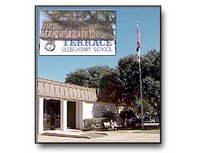
Welcome to branding gone wacky. Driving behind a family van in my neighborhood, I realized one of its bumper stickers identified the driver as the parent of a kid attending Terrace Elementary School, one of more than 30 elementary schools in the Spring Branch ISD system.

It’s the same elementary school that two of my children attended. But somewhere along the years, it has adopted a new mascot. Now, this elementary school’s teams are called Timberwolves – complete with a wolf’s head with fangs showing.

First-graders named Timberwolves? Like after the large gray wolves (Canis lupus) that used to be prime carnivores throughout northern North America and Eurasia? I happen to like wolves. But there’s something…aggressive…in the mascot name; it doesn’t exactly represent the kind of environment I’d want to dump young kiddos into.

Now, if Terrace Elementary School adopted its mascot to honor the US Army’s famous 104th Infantry Division, then I’m all in favor – that’s the unit patch pictured to the left. Somehow, though, I doubt it. This adoption of aggressive beasties as mascots has become epidemic in the American school system and it has descended to the elementary school level. I guess the more appropriate Timberpups never came up.

A quick local check has turned up Cougars, Lions, and Tigers; Bears, Bulldogs, and Huskies; Falcons and Eagles (both good raptors); even a Gator or two. These outnumber the Mustangs and the Dolphins – and Pandas (which at least deliver a warm, fuzzy feel) by a wide margin.

Shucks, when I went to Marist School in Atlanta, we were the Cadets, because we were a military school after all. Curiously, long after I had graduated and the school became a co-ed general education institution without a National Defense Cadet Corps program, the mascot became the War Eagle. Go figure.

Will this trend continue its bloodthirsty advance? Do we look forward to Cobras, Hyenas, Killer Whales? (These probably exist by now.) How about John F. Kennedy Elementary’s Fifth Grade soccer team becoming the “Bloody-Fanged, Prairie Dog-Rending Wildcats?”

Oh, for the days of Crickets and Chipmunks.

Thursday, December 01, 2005

Don’t Shout

Clients change advertising and PR agencies for a variety of reasons…the agency-search consultants tell us so. You can check out consultants’ Web sites, you can talk to (or read interviews with) big-scale agency executives. The reasons will appear to be different depending on fashion. Maybe the old agency’s creative is “stale.” Maybe one party is just plain tired or fed up with the other.

There are as many different reasons for changing agencies as there are people who do the changing…because, I think, of the “quality of the interaction.”

This is a double-barreled challenge.

First, agency executives say clients are not looking for better creative so much as they are looking for changes in the quality of the interaction between their customers and their messages. You may choose to define this change any number of ways, which is what companies large and small are doing by cutting budgets for traditional media (radio and broadcast TV) and exploring new media – everything from hot cable shows to word-of-mouth or “guerilla” marketing.

In a recent Wall Street Journal interview, Lowe Worldwide Chairman Mark Wnek said that “…many creative executives are not ready for change. There is a profound love affair between creative executives and the little 30-second Hollywood films they create.” (That’s p. B28, 11/30, for non-subscribers.)

Improving the interactions between the clients’ messages and prospective customers, as demonstrated (for example) by the multi-media work for the Mini automobile and redefining quality-of-life a la Target department stores, suddenly makes for better sales, and therefore better client-agency relationships. Or at least better relations between the client and whomever is the trendy purveyor of the apparent solution.

Second is the old “interface” problem between the client people and the agency people. Good relationships in this context are worth their weight in gold. Bad ones lead to more changes.

In a post that’s meant to be relatively short, I don’t know how much detail you need about this part of the client-agency relationship. But I suggest that good chemistry is far more important in the selection and retention of marcom suppliers than most professionals credit.

In both cases, Miss Manners would perhaps say, “Stop shouting.” Amiability is perhaps worth more than some people think.

What do you think?

© Photographer: Peter Hansen Agency: Dreamstime.com